
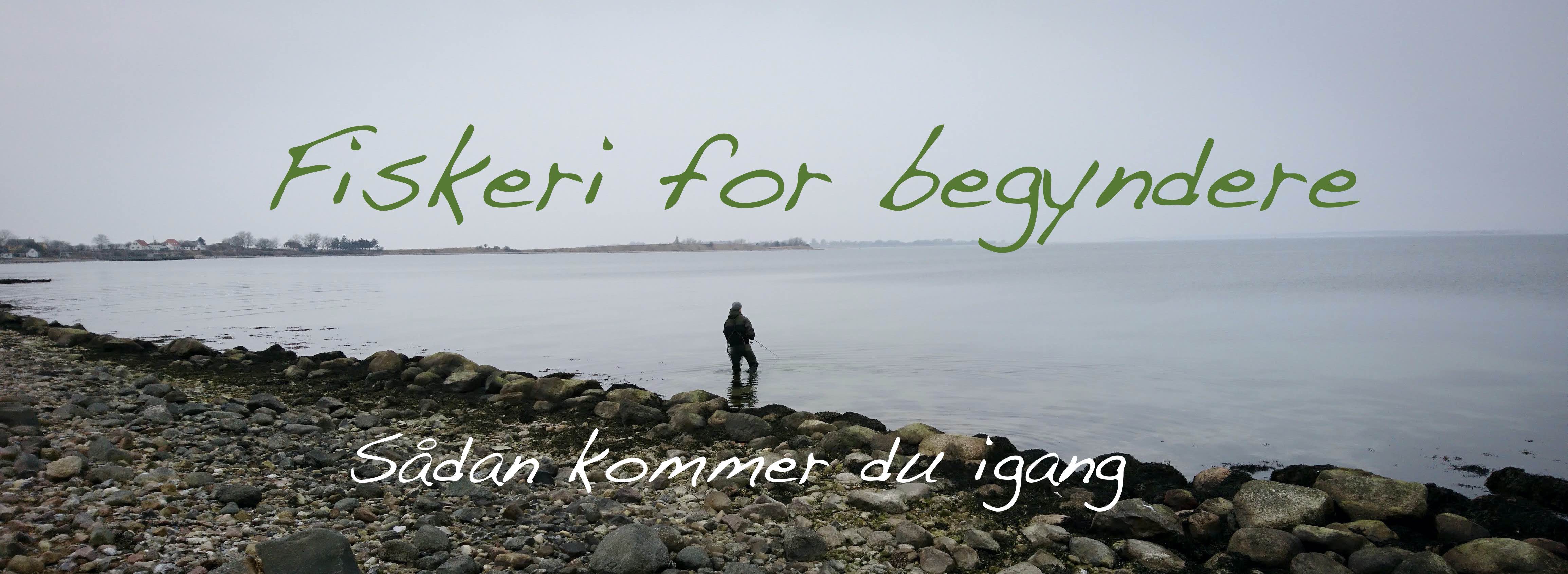
Fishing for Beginners – How to Get Started
Recreational fishing is one of those outdoor activities that has it all: great nature experiences, excitement, and plenty of fresh air! Plus, fishing can often be combined with other outdoor activities like hiking, campfire cooking, and sailing, and there are opportunities to catch fish all year round, so you’re not limited by the season.
On the other hand, fishing jargon is full of terms like lures, flies, bombarda floats, waders, sinkers, bobbers, etc., which can seem intimidating when you want to try fishing for the first time.

Sea trout fishing from a boat
There are almost as many ideas, techniques, and opinions as there are anglers on the pier! But it doesn’t have to be hard to get started.
In this post, we take a closer look at how to quickly get started with fishing. The focus is on recreational fishing from/near the coast, but many of the principles can be directly applied to, for example, lakes, streams, and put & take fisheries if those are of greater interest.
Fishing rod… or what?
There are many ways to fish. For example, you can set nets or traps from a boat, jig for cod, or fly fish – the elegant discipline where the line is swung over the head in long arcs before being cast out toward the fish. This post focuses on the classic fishing discipline, ‘spin fishing,’ which is used in virtually all types of fishing waters. Here, a lure/bait is cast out a long distance and then ‘spun’ back in, hoping a fish will bite the hook before the lure is pulled back to shore.
How to get started fishing
To get started with spin fishing, you basically need only three things: a fishing rod, a reel with line spooled on it, and bait at the end – the bait you try to lure the fish with. Additionally, it can be helpful to have a landing net at the coast to ‘land’ the fish and possibly a pair of waders (the long, green rubber pants) if you fish from a shallow coastal area. Waders let you go a bit further into the water without getting your pants wet. It’s also a good idea to have a small tackle box with a fishing knife, pliers, and preferably a small club (priest) to humanely kill the fish if it’s going to the dinner table. Alternatively, you can use a stone from the beach. Also, remember to bring warm and waterproof clothing, as it can otherwise become a chilly experience to spend many hours by the coast.
Setting up the rod
When you set up, it means you prepare the fishing rod.
The fishing rod, usually made of two or more pieces, is assembled, the reel is mounted on the rod, the line is threaded through the rod’s guides, then the bait (in this case a lure) is tied on – and then you’re actually ready to get started – or are you? Fishing with a spinning rod is probably the easiest fishing for beginners, but how do you know which rod, reel, or lure to use? Spinning reel with braided line on the left and fly reel on the right
Fishing rod, reel, and lure
There are differences between fishing rods, reels, and lures. Which you should choose mainly depends on what you’re fishing for and, not least, where you want to fish. If you want to catch big fish, you need a stronger rod than if you’re fishing for roach in the local lake. For coastal fishing, rods usually range from 8-10 feet with a casting weight (the weight of the lure) of about 10-30 grams. Typically, a spinning reel is mounted on the rod, spooled with nylon, fluorocarbon, or braided line. Braided line has the advantage of being stronger, so the line can be thinner and handle the same load as a thicker nylon line. Also, braided line has less “memory” and therefore doesn’t form annoying coils when casting. A downside of braided line is that it’s a bit more expensive. A coastal rod can be very versatile and is well suited for beginner fishing, as it can also be used to some extent in put & take lakes.
At the end of the line, the lure is tied on – possibly with a ‘snap’ so you can easily switch between different lures. At the end of the lure, there is usually a treble hook or a single hook, but you can also use a ‘silk hook’ when fishing for garfish.
Typical lures for garfish fishing – two with silk hooks and one with a treble hook. The silk line works because the garfish’s many teeth get tangled in the silk threads
Where is good fishing and what can I catch?
One of the most fun ways to get started with recreational fishing at the coast is when the garfish migrate through the Danish belts and fjords in spring.
In the Natural Pocket Calendar you can follow animal and plant life throughout the year. Garfish are easy to catch, taste good, and put up a pretty good ‘fight’ for their size. Garfish fishing is ‘good weather fishing,’ so you can enjoy the sun’s rays while fishing – garfish are not picky fish. A fun little fact about garfish is that they have green bones, which does not affect their good taste! Garfish can be caught from the beach, on piers, and from the quay and come in large schools.
The sea’s ‘silverware’
A somewhat more demanding fish is the sea trout, which anglers from home and abroad spend countless hours trying to catch every year. It is considered one of the finest fish you can catch here. Once you move on from garfish fishing, you can spend a lot of time diving into techniques and gear that can optimize your fishing and land one of the beautiful specimens – perfect when you move beyond beginner fishing. Examples of sea trout lures in different sizes and colors
Closed seasons and fishing licenses
When fishing as a beginner at the Danish coasts, you need to know that it is mandatory to have a fishing license, which can be purchased for a day, a month, or annually. The license allows you to fish at all coasts in Denmark (different rules apply for lakes and streams) and is quite inexpensive. The proceeds from sold fishing licenses go, among other things, to restoring waterways and stocking fish. You should also be aware of closed seasons and protected zones (often around stream outlets), which you can quickly look up online.
You can buy your fishing license here
The cast, spin, and the fight
If you’ve never cast a fishing rod before, it’s recommended to team up with someone experienced or find one of the many good instructional videos on YouTube that provide a good visualization.
The principle is to flip the bail on the reel while holding the line on the rod with your index finger. Now the line can run freely from the reel. Then lift the rod over your shoulder and in a smooth motion catapult the lure out while simultaneously releasing the line with your index finger. It takes a few tries, but you learn quickly. When the lure is (hopefully) cast out a good distance, it needs to be reeled back in. It’s recommended to vary the speed and possibly make some short ‘spin stops’ that let the lure sink a little before reeling in again. This is often when the fish bite. Garfish generally like the lure to be reeled in relatively quickly. If there’s no bite, try changing the lure or moving to a new spot.
Flies are not only decorative but also extremely effective for catching the sought-after sea trout
You won’t miss it when a fish is on the hook. The rod vibrates and the sound of the reel’s drag letting line out makes your pulse rise. The fight is on! During the fight, you want to tire the fish out so it can be landed without damaging the rod or line. The reel’s drag can be adjusted to make it harder for the fish to ‘take line.’ When the fish is getting tired, you can gently bring it ashore. Garfish are relatively easy to catch and come to Denmark in large schools in spring. Fishing for garfish is good fishing for beginners
I caught a fish – what now?
Hooray! You caught your first fish and even ‘landed’ it (got it ashore). Now you need to find out what kind of fish you have on the hook, whether there is a closed season for that fish, and if it meets the minimum size (for example, there is no minimum size for garfish, and sea trout must be at least 40 cm before it can be kept). If the fish is going to the kitchen table, it’s important to kill it quickly and humanely. This is best done with one (or more) hard blows to the fish’s head. You can buy a so-called ‘priest’ (a small club) for this task, or you can use a stone from the beach. If the fish does not meet the minimum size for the species, it must be released as quickly as possible in the most gentle way. Some anglers also practice ‘catch and release,’ meaning they fish only for the experience and the fight. They release the caught fish again, among other things, to preserve the fish population.
Three large sea trout cleaned and ready for preparation
Oh no! Another blank day – remember to enjoy the experience
It can be frustrating to stand for many hours on the coast without feeling anything on the other end of the line. Try changing location (spot) or switching lures. But remember: The longer the bait is in the water, the greater the chance of a catch! Also, remember to bring a good lunch and a thermos/gas burner/coffee cup on your trip. That way, it’s not so bad if the fish this time swim past your lure – on the other hand, nothing beats the feeling when, as a beginner angler, you get a fish on the hook for the first time.
Finally, it should be mentioned that in recreational fishing there is always the opportunity to develop and try new techniques and gear. Once you have mastered the basics and want to make your fishing more advanced, there is a lot of exciting reading and video material where you can find much more specialized information about specific fishing techniques, fish, bait, and equipment.
Good luck and tight lines!