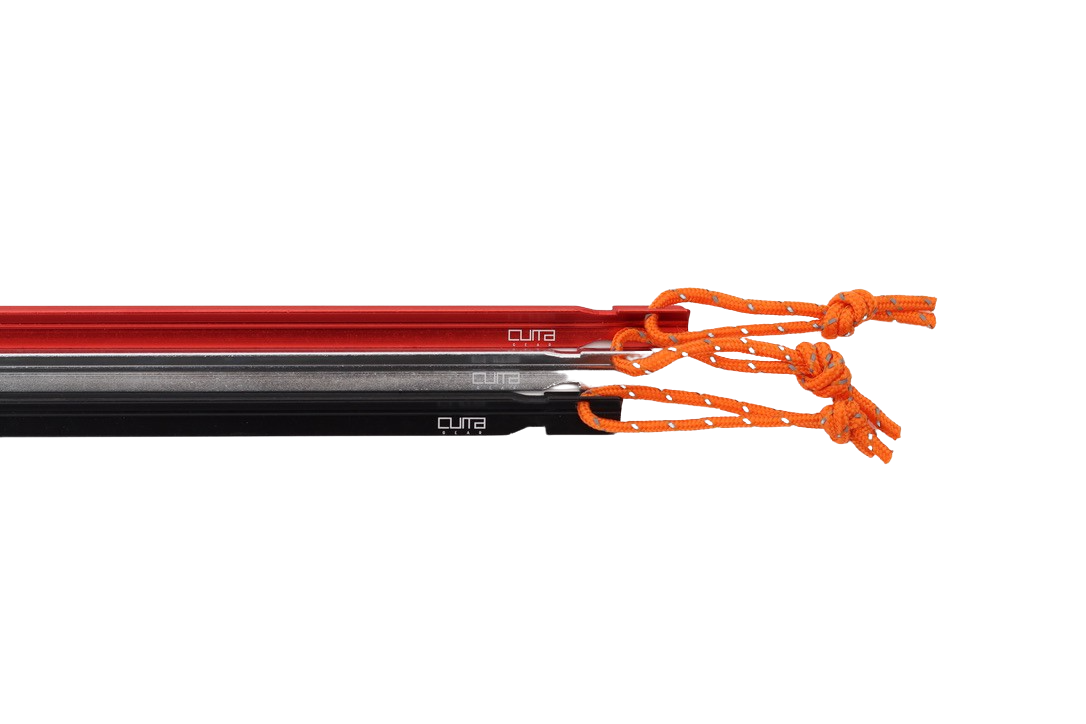
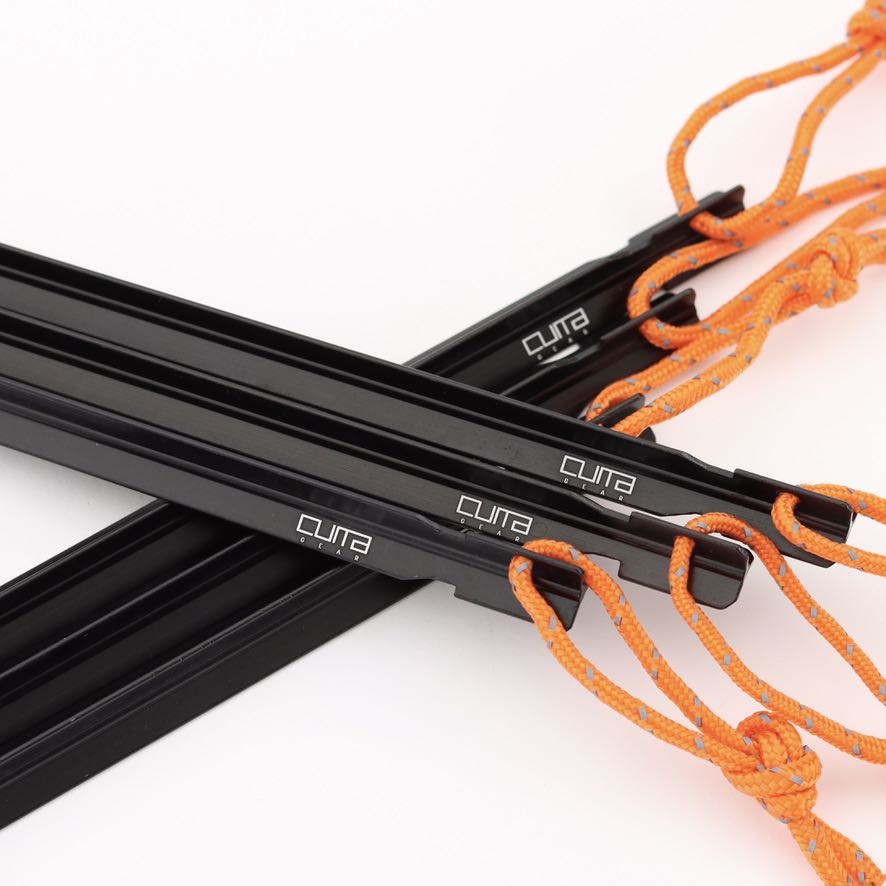
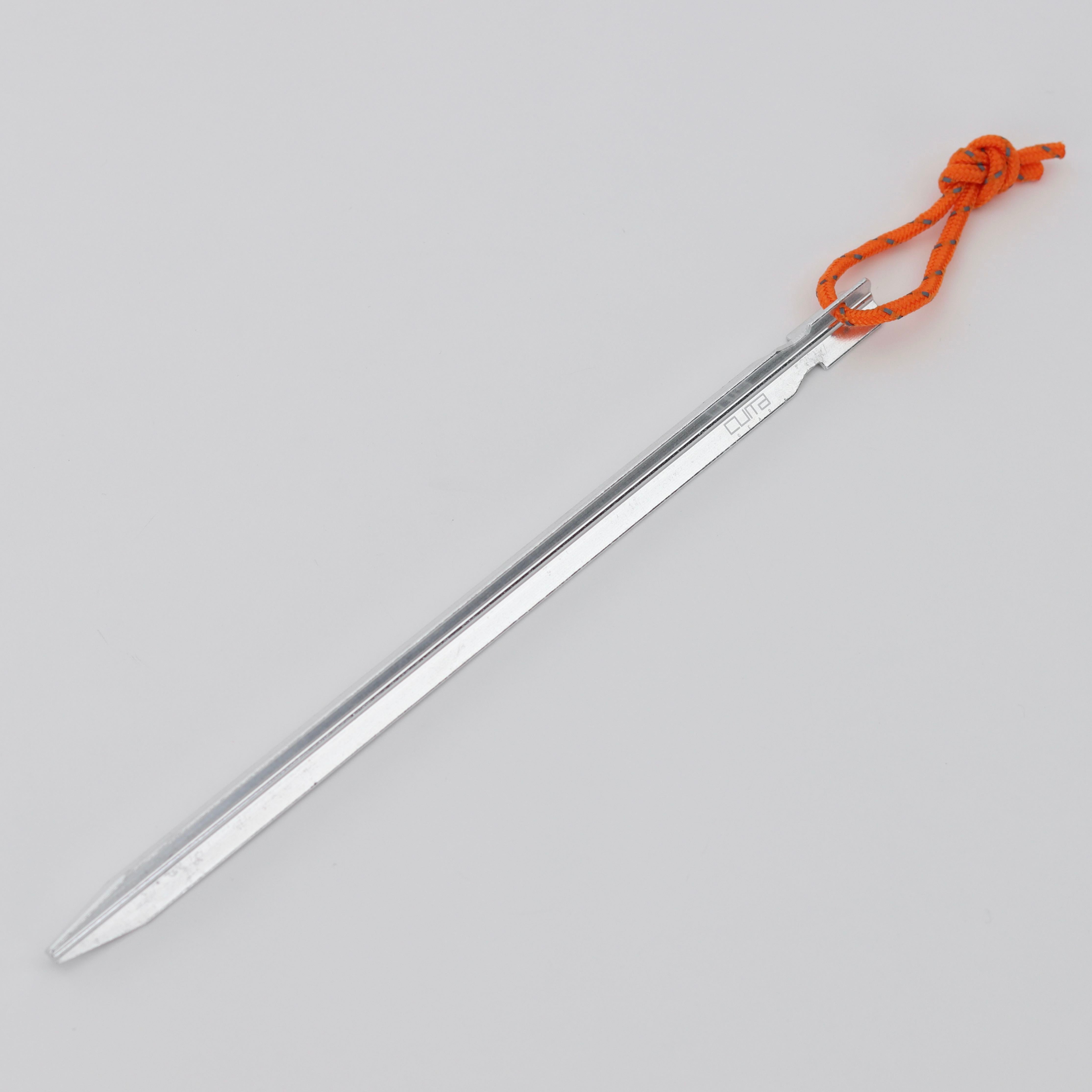
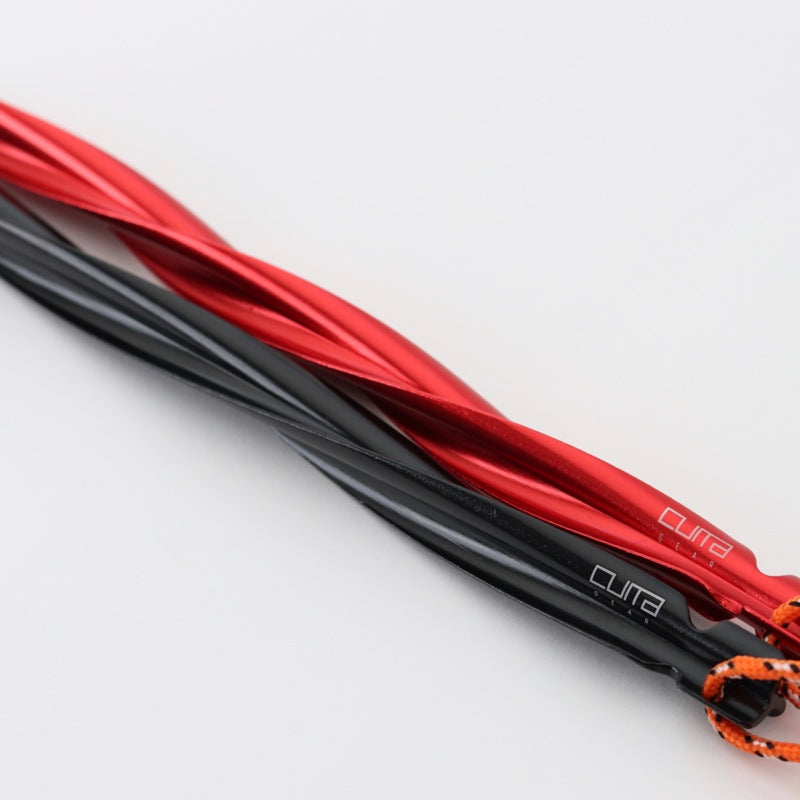
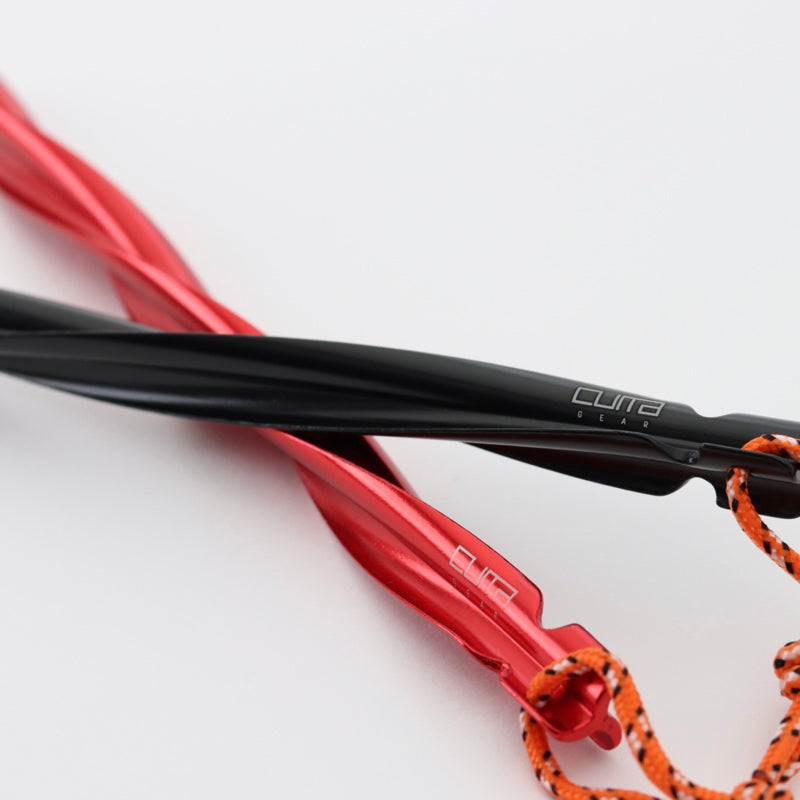
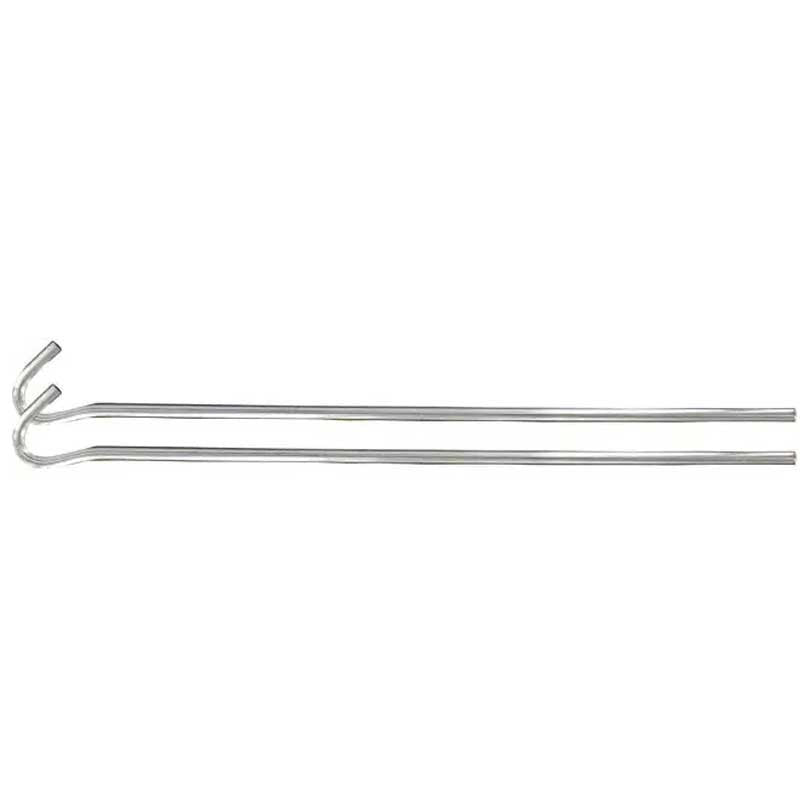
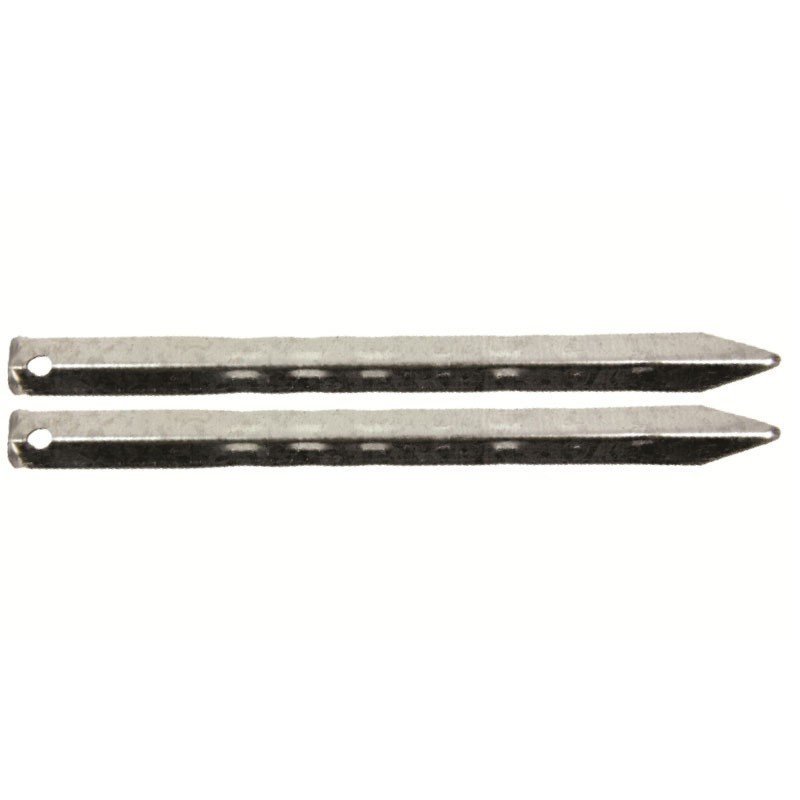
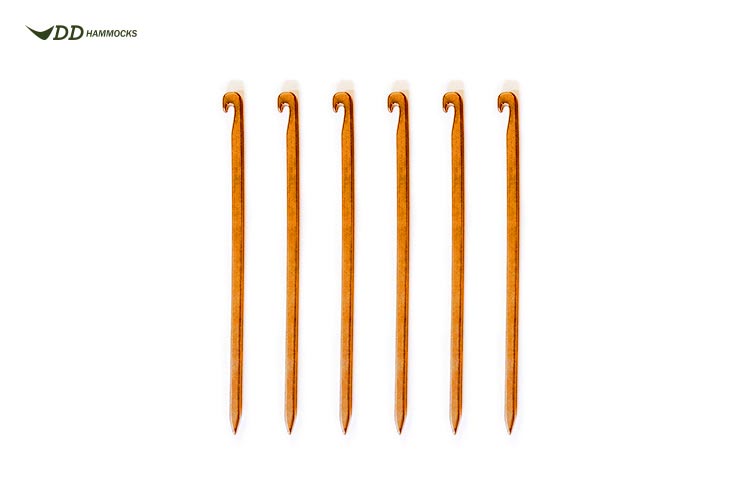
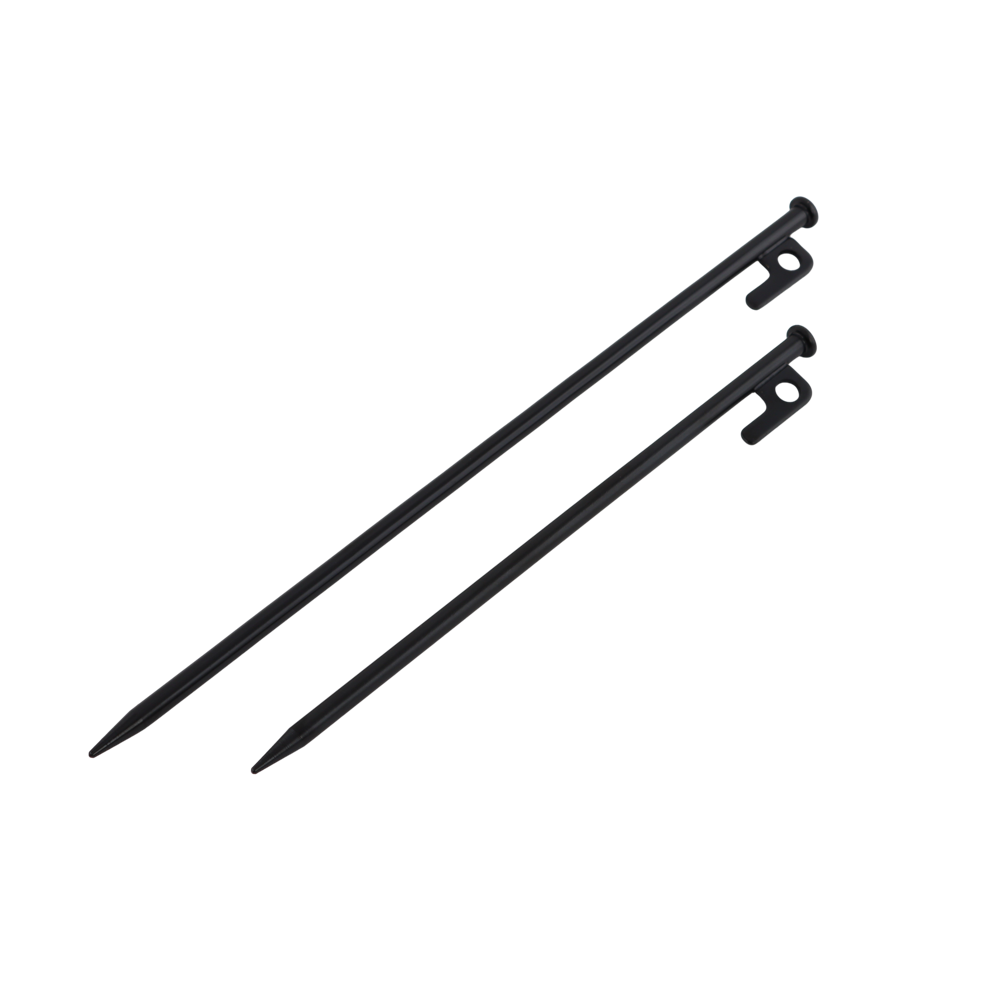
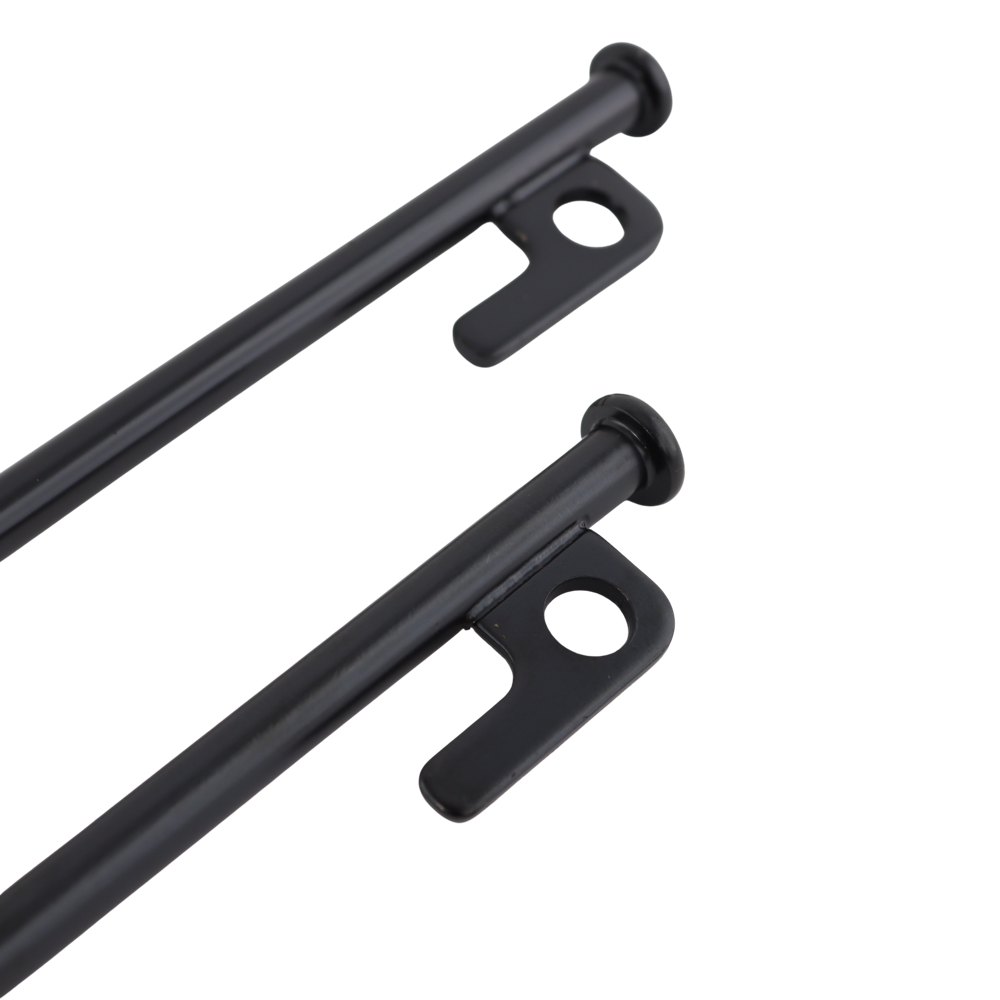
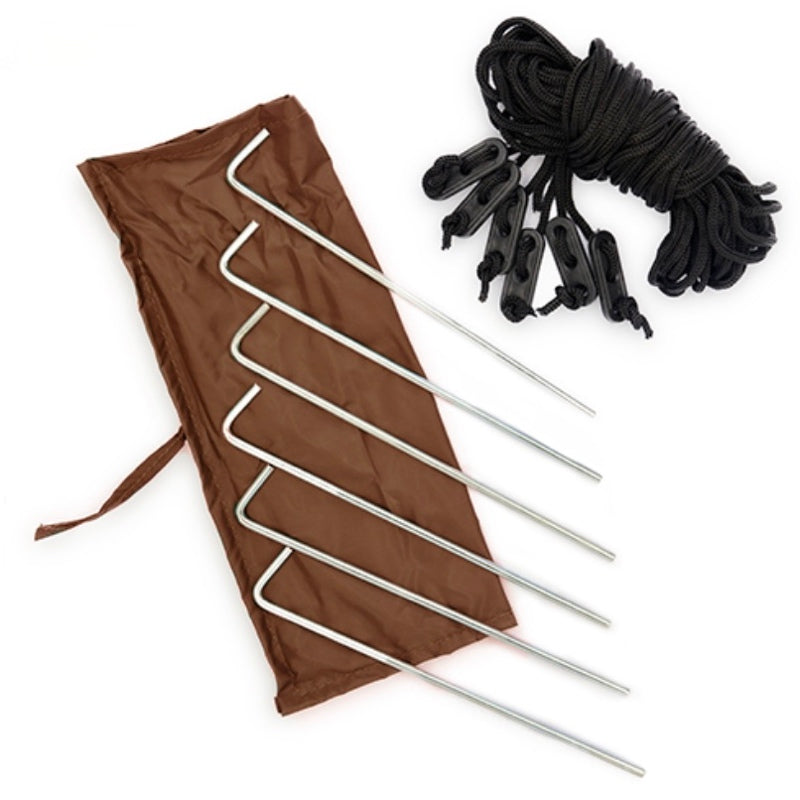
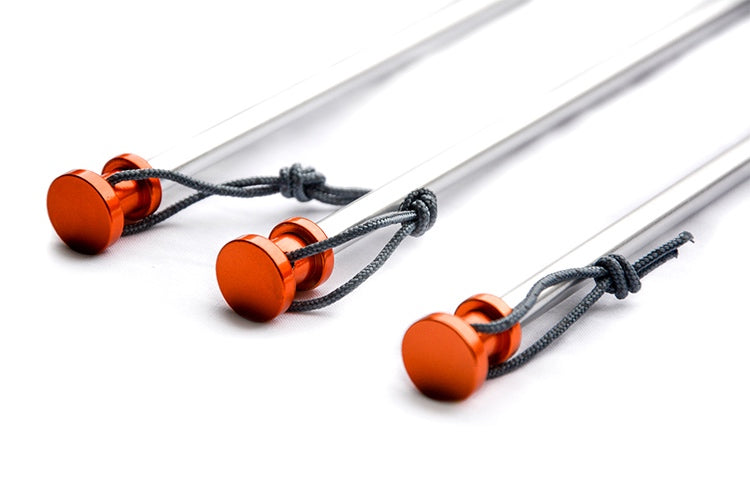
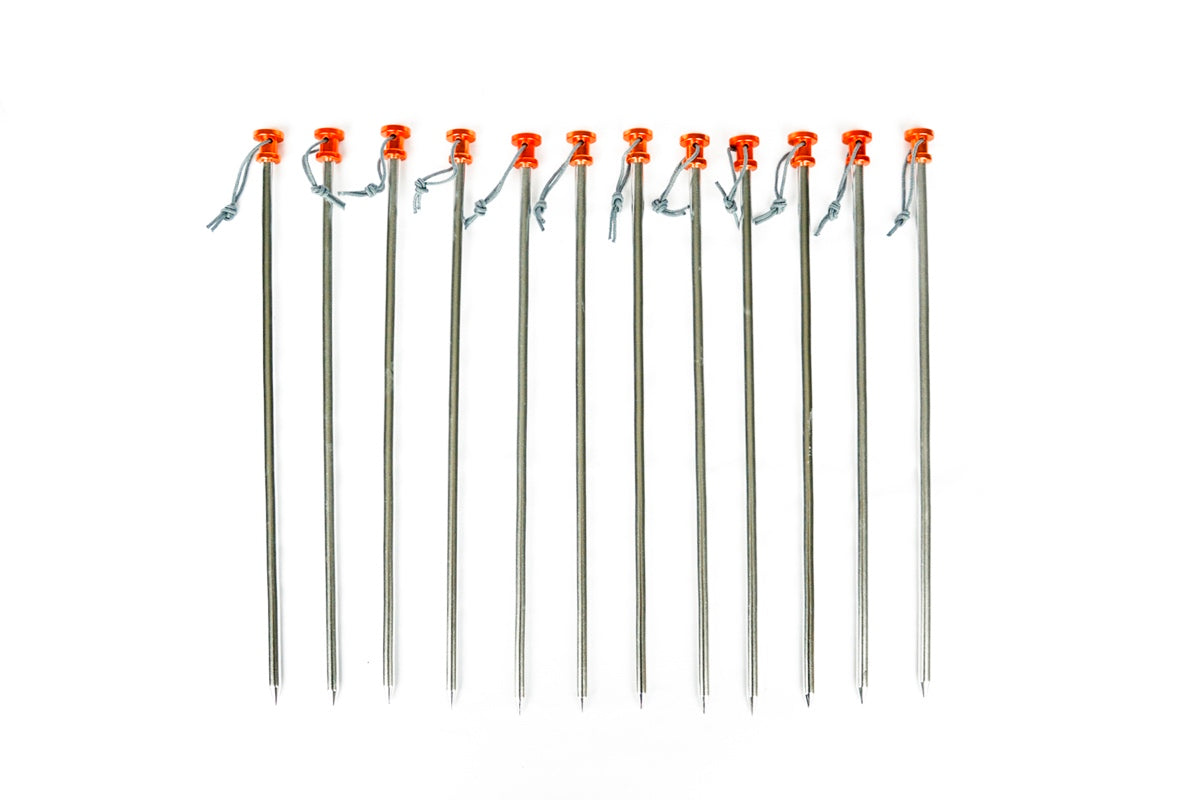
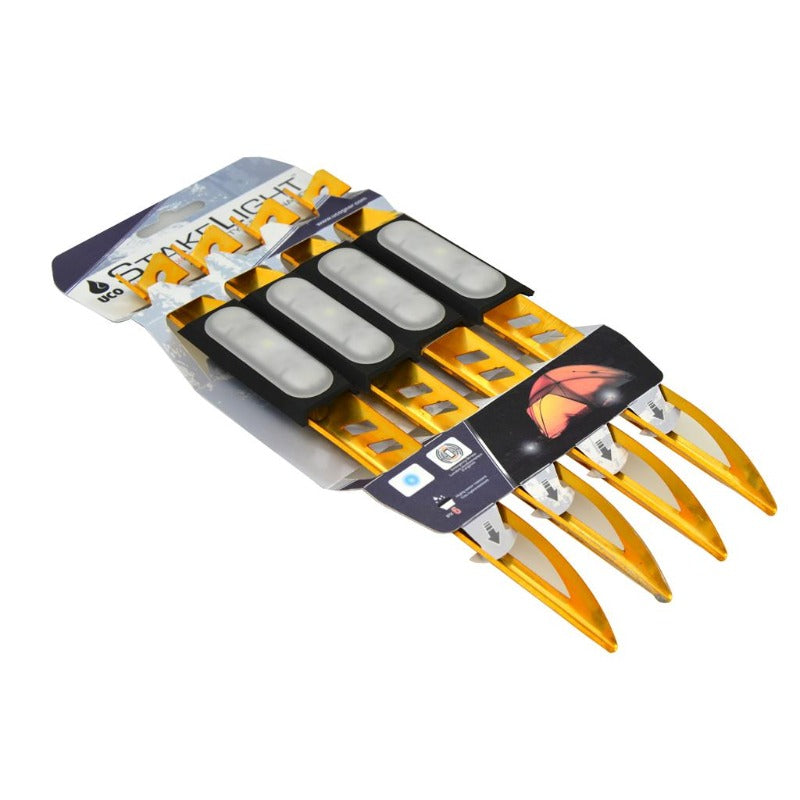
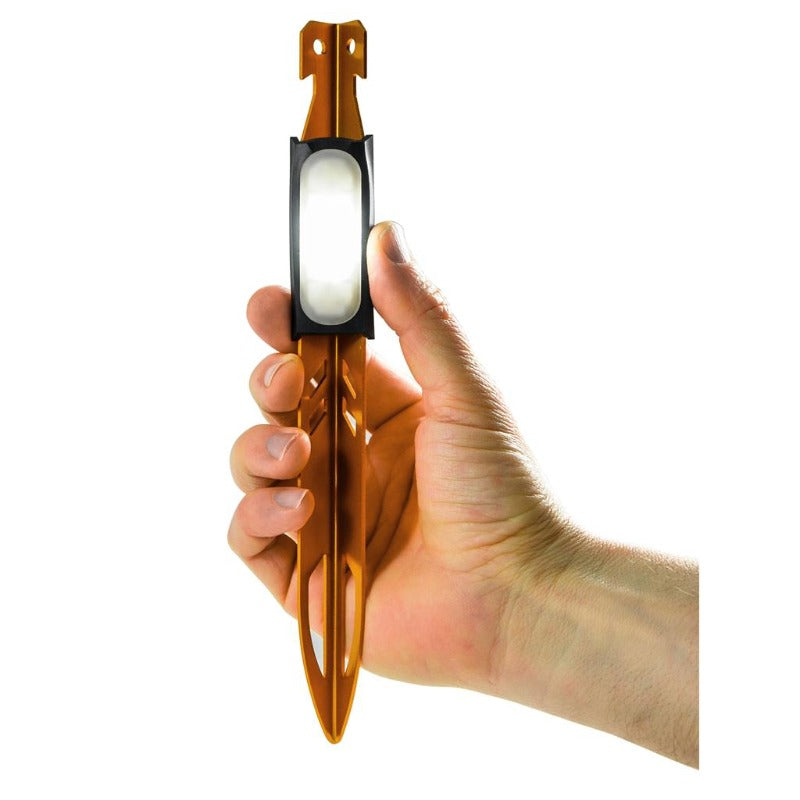
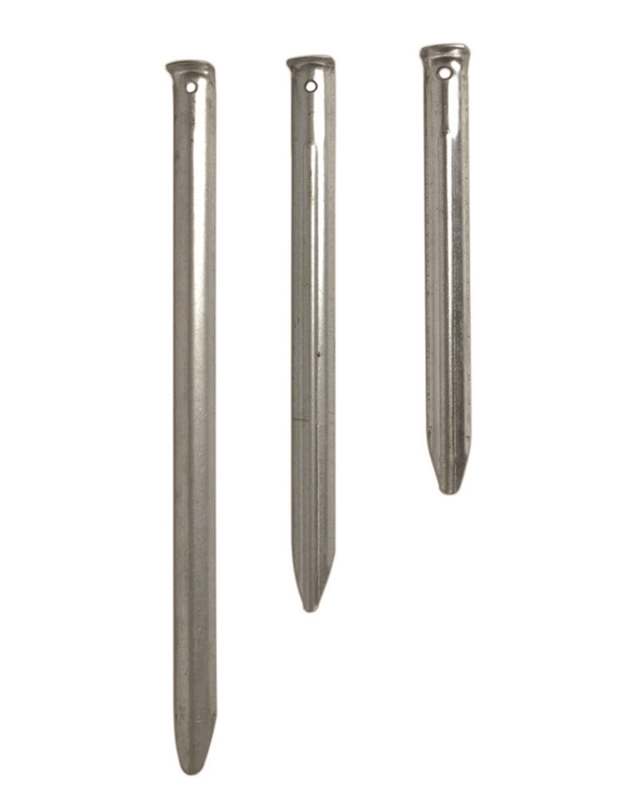
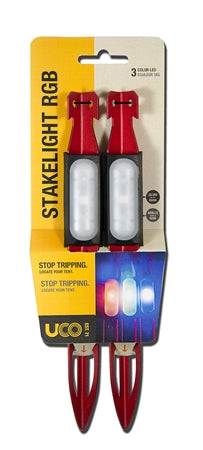
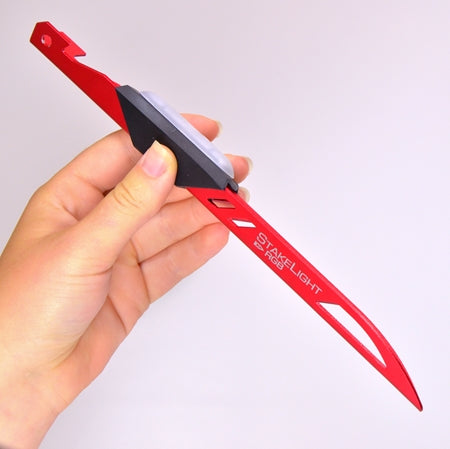
Aluminum stakes are not the strongest on the market. They are more flexible than, for example, iron, but on the other hand, they weigh much less and are therefore quite popular. They are relatively sturdy, and good aluminum stakes typically don’t cause any problems unless the ground is very hard. They are great when you need to bring them on hikes because they don’t weigh much.
Aluminum stakes come in many different shapes, so that is also something to think about. Additionally, it is generally a good idea to consider what kind of stakes you need.
CHOOSING STAKES
If you are setting up a tarp or a tent, it is a really good idea to use stakes. Most people know that. However, there is a wide variety of stakes in different shapes and materials, which can make it difficult to choose the right ones. First and foremost, it depends on what the stakes will be used for, and in that context, there are several things to consider:
The ground. Many of us have probably experienced stakes bending or falling out, which is often because the stakes used are not well suited for the ground you are trying to put them into. Therefore, it is a good idea to understand what kind of soil you will be camping on.
The size of the tent or tarp. As a rule of thumb; the bigger the tent, the stronger the stakes need to be.
Wind. Wind shakes tents and tarps, so it is important that the stakes can hold them so they don’t blow away.
The weight of the stakes. If you are going far with a full load, you will probably prioritize lighter stakes and thus compromise a bit on their strength. On the other hand, if you are car camping, you can just bring the heavy iron stakes without any problems.
DIFFERENT STAKE SHAPES
As mentioned, stakes come in many different shapes because they are adapted for different purposes. Below are some of the most common types:
Spikes. Most people are familiar with this classic type. They are thin and have a 'handle' on top. These stakes are super easy to use but are best suited for more compact soil, as they can easily come loose otherwise.
Nail. Another type, which might somewhat resemble the spear-shaped type, is nail-shaped pegs. These are thin but typically have no handle. Instead, they have a solid top that allows you to use a hammer (or a stone if you don’t want to carry a hammer on your trip) to drive the pegs into hard soil. Nail-shaped pegs also work very well in rocky soil and can even be used between cracks in rocky ground.
V-shaped. Another classic peg type is V-shaped pegs. These look like a V when viewed from above. They work for most surfaces, as their shape ensures a good grip in both loose and hard soil.
Y-shaped. Y-shaped pegs resemble V-shaped ones except they look like a Y from above. This type works well in both hard and loose soil, where it has an incredibly good grip. Therefore, it also works well as a storm peg in very windy conditions. This is due to the larger surface area compared to the V shape.
Screw. Somewhat similar to a Y-shaped peg, but twisted instead. This allows it to be screwed into the ground, providing a much better grip. This type is suitable for most types of ground and can also be used in strong winds. Due to their shape, these pegs are very strong, even if made from aluminum.
T-shaped. If none of the above peg types can grip the ground, you might need a T-shaped peg. This type is very strong, and if made from a sturdy material, it can be hammered into very hard surfaces, such as clay and even ice. It also works great for snow and sand.