Altberg
3 products
Showing 1 - 3 of 3 products
Altberg Boot Factory has existed since 1989 and is the last traditional bootmaker in England. Altberg is known worldwide for making exceptional handmade boots of high quality using traditional methods. Only a few places in the world offer the kind of craftsmanship and passion for bootmaking that Altberg provides. That is why we are very proud of our collaboration with Altberg, and we believe they make the world’s best boots.
The story behind Altberg Boot Factory
Altberg’s story actually begins back in the late 1930s at another shoe factory in Rochdale, England. This shoe factory was owned and operated by a cooperative, where members considered each other equals. One of these members was William Shepherd. However, those were tough times, and the factory in Rochdale was forced to close. This led William Shepherd to start his own shoe factory together with his son John. This factory became a success, and in the late 1960s, William and John Shepherd opened another factory in Richmond, England. At the Richmond shoe factory, a bootmaker named Mike Sheehan started, who later founded Altberg.
The shoe factory in Richmond became the largest employer in the town with 320 employees. They made 25,000 pairs of shoes per week. But recessions and increasing imports of cheap products pressured the traditional factories, which all had to close one by one. The Richmond shoe factory was one of the last shoe factories left in England but had to close production in 1989 as well.
Left standing was bootmaker Mike Sheehan, who had practically grown up in the industry that was now almost extinct. This gave him an idea, and that idea was Altberg Boot Factory. People thought he had gone mad and that traditional factories and low-tech production belonged to the past. But Mike Sheehan knew nothing but shoe and bootmaking. The first five years were tough. They had no money, no orders, and no idea how to run a business. But the hard work slowly began to pay off, and during the 1990s, orders became more frequent, and they even started having waiting lists for their most popular models.
In 2001, Mike Sheehan got the opportunity to open another factory, this time in Italy. Italians still appreciated good craftsmanship, and shoe and bootmakers thrived in the area where Mike Sheehan’s new factory was located. Here he could get all the necessary materials locally. The new factory also made it possible for Mike Sheehan to start producing a new collection including military and police boots. Altberg has been making boots for the British military and police ever since. Altberg has also supplied boots to the Danish military and many other countries.
To this day, you can still find Mike Sheehan at his factories in both England and Italy, busy with his fantastic bootmaking.
How an Altberg boot is made
Today, most boot manufacturers use computer programs, lasers, and other modern machines for both design and production of boots. At Altberg, however, it is different. Mike Sheehan learned his craft using traditional methods, and he sticks to those methods. In fact, one of the textbooks Mike Sheehan still finds useful was written all the way back in 1917.
The first step in creating an Altberg boot is, of course, the design itself. Mike Sheehan draws his boot designs by hand with pen and paper. Each part of the boot is drawn and cut out in sections, and these sections are then used as patterns for the leather or textile parts of the boot. Prototypes are cut out according to the patterns and adjusted again and again until the bootmaker is completely satisfied with the sizes of the different sections. Now the bootmaker has one finished size of the entire new boot, and that version just needs to be converted to all the other sizes. The process of converting the different sizes is done exactly the same way Mike Sheehan learned from William Shepherd back at the old Richmond shoe factory. Likewise, Altberg uses an old-fashioned ‘clicker’ knife to cut all the leather prototypes.
When all the sizes are ready, steel knives must be made for the actual production of the new boot. The steel knives are used instead of the old ‘clicker’ to produce larger quantities of boots. The steel knives are used to cut out the different sections, so they must be adapted to the new patterns in the various sizes. It usually takes between 3-6 months to be ready to start production of a new boot model at Altberg. Compared to modern, digitized boot production, which only takes a few days to prepare, this is quite a slow process. However, these are the methods Mike Sheehan has always used, and they characterize the good, traditional craftsmanship at Altberg.
When the leather or textile sections are cut, they must be prepared for sewing. The edges of the sections are trimmed, and often a reinforcing layer of textile is ironed onto the back of the leather sections. These processes are also done by hand using traditional tools. When the sections are ready to be sewn together, this is also done by hand on classic sewing machines. Finally, the entire boot must be steamed, shaped, and attached to the sole. These are detailed processes, all carried out on the same type of hydraulic machines that Mike Sheehan saw the first time he stepped into the old Richmond shoe factory.
The many manual processes an Altberg boot goes through may seem cumbersome. But it is the traditional craftsmanship that keeps Altberg connected to an otherwise bygone era.
A boot you will never want to be without again
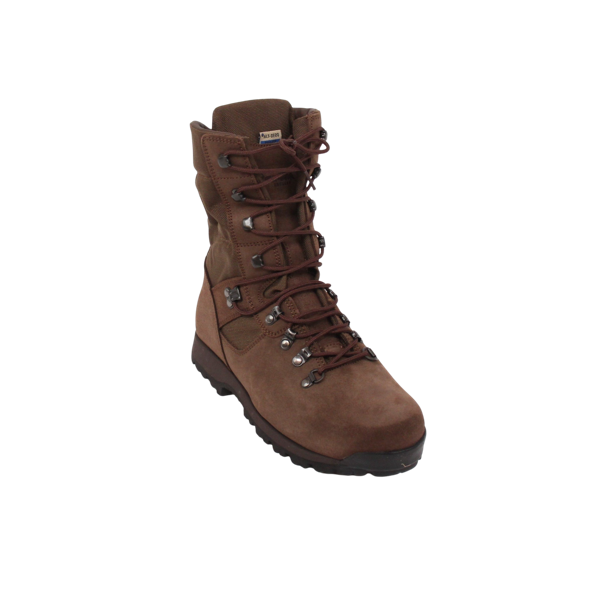
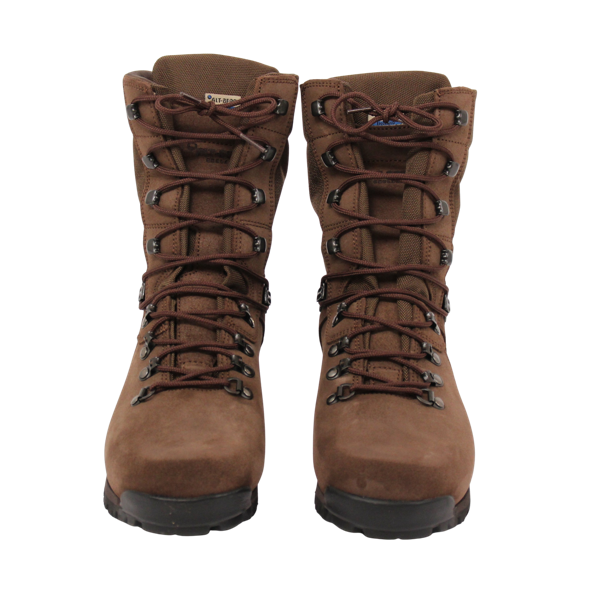
Whether you need boots for long hikes, outdoor trips, hunting, or just everyday use, an Altberg boot is always a great choice. Most Altberg boot models are made with water-repellent leather, suede, or textile, waterproof and breathable lining, molded midsoles for each size for the best possible support, shock-absorbing outsoles with strong torsion and flex resistance, and all models come in both regular and special sizes. All Altberg boots are designed to provide maximum breathability, flexibility, and comfort.
Altberg boots are designed for professional use. They are sturdy boots you can use in all kinds of terrain, making them very suitable for outdoor use and outdoor life. At Survivalstore, we have both the heavy-duty combat models designed for the Danish military. These are boots you can use for EVERYTHING, and that will definitely keep you warm and dry all year round. We also have the lighter models and so-called desert boots, which can easily be used year-round but are especially ideal in the summer months here at home. They don’t have quite as many features as the combat models, but they are still professional boots of extremely high quality, and perhaps the lightest boots you can find at all. These types of boot models have a high shaft designed to provide optimal support around the ankles and leg. Our selection of Altberg boots includes boots suitable for activities such as tabbing/trekking and hiking, but you can also use them daily. One thing we dare guarantee: if you choose a pair of boots from Altberg, you will never want to be without them again!
Care for your Altberg boots
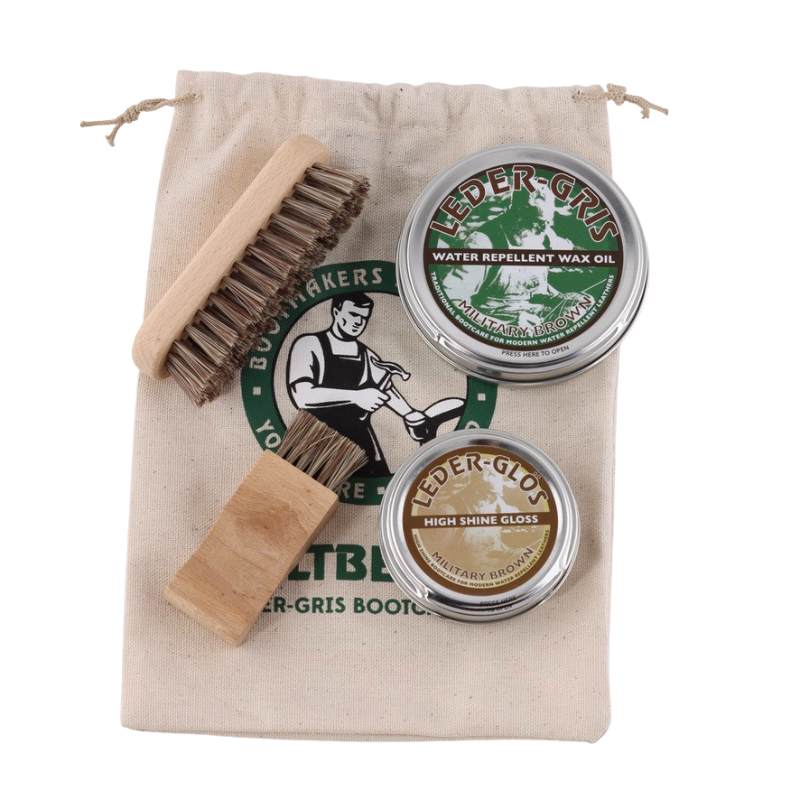
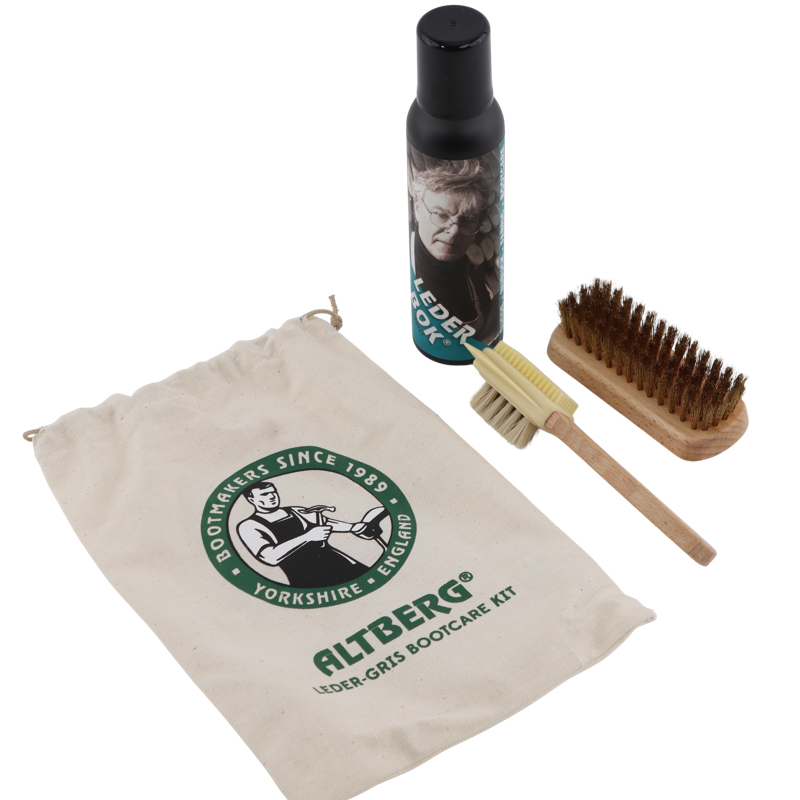
You can extend the life of your Altberg boots by taking good care of them. Especially leather tends to become hard and crack over time. This is due to the constant cycle of getting wet and drying repeatedly. Regular use of leather grease can help delay this process and keep the leather soft longer.
Some good rules of thumb are never to dry your Altberg boots quickly; always let them dry slowly in a cool, shaded place. Do not dry them in a room that is too warm, and never leave them in the sun. Also, never use heaters or other devices to force-dry your Altberg boots. Another good tip is to use leather grease while the boot is still damp.
Always remember to waterproof your Altberg boots, regardless of the material they are made from. Also, remember a good pair of socks, and you are ready to explore the Danish landscape on foot.