
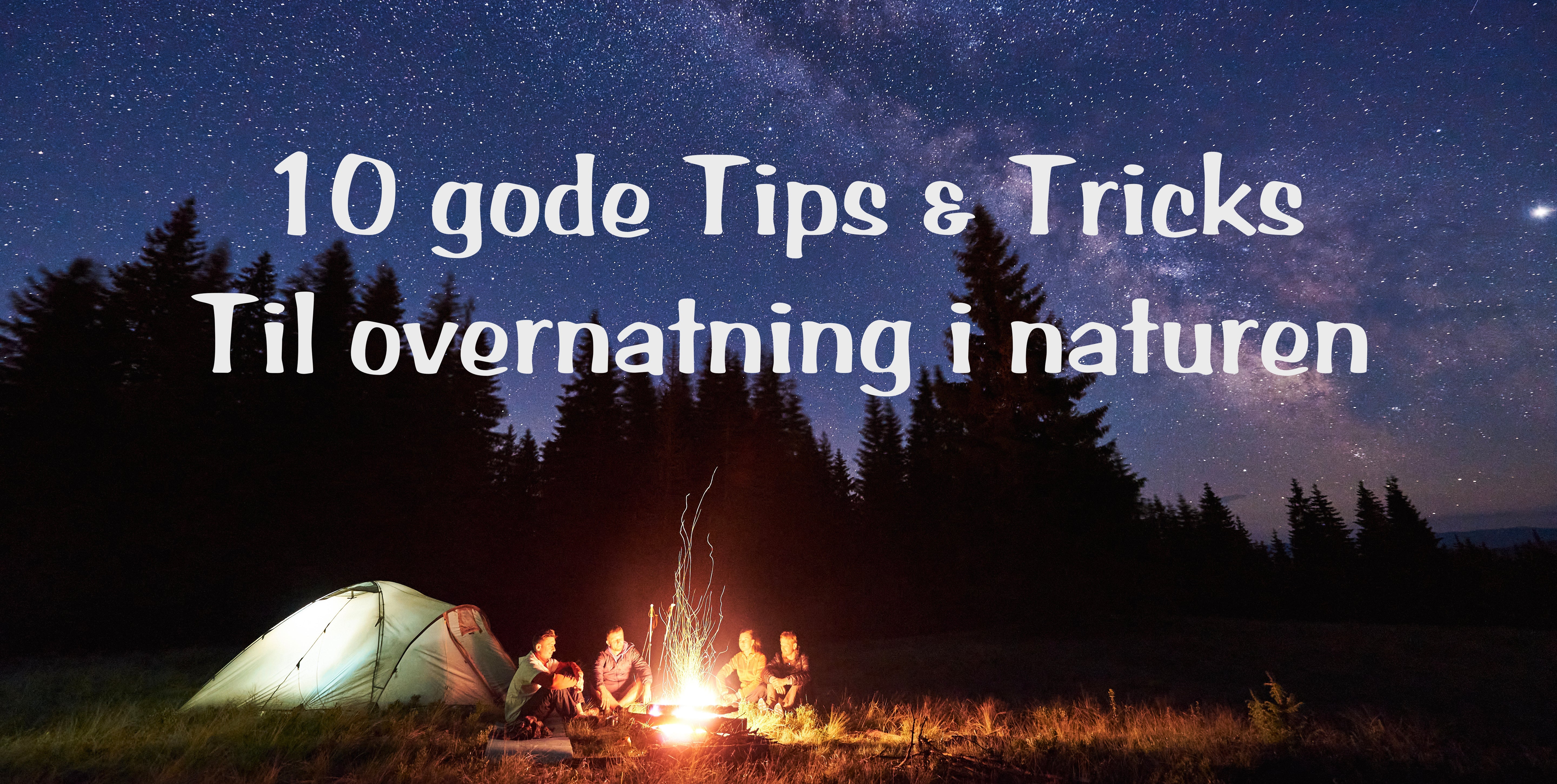
10 GREAT TIPS AND TRICKS FOR OUTDOOR OVERNIGHT STAYS
Whether you’re going on an outdoor trip for the first time or have been enjoying wilderness life for a long time, there are always new tricks to learn. Here are some good tips and advice on how you can add a little more luxury or comfort to your outdoor trip.
1. BRING A HEADLAMP
A headlamp can be super useful if, for example, you’re sleeping in a tent outdoors or at natural campsites. These places are not lit when darkness falls, so it can be both scary and difficult to get up at night if you need to go to the toilet or go out to find glow worms. This is where having a headlamp really comes in handy. It’s especially smart because it’s worn on the head, leaving your hands free. With a bit of light, it suddenly becomes much easier to find the tent zipper and navigate without tripping over things on the ground or tent guy lines.
Having a headlamp makes a huge difference, and if you only need it for this purpose, you don’t even have to buy the best one available, so it won’t be too expensive.
Find headlamps here
2. REPLACE YOUR SLEEPING BAG WITH A QUILT
If it’s not very cold when you go camping and you really want to save weight and space in your backpack, you might consider bringing a quilt instead of a sleeping bag. Besides weighing and taking up less space than a sleeping bag, a quilt also offers greater freedom of movement, making it more like a duvet and therefore very comfortable to sleep with. However, it’s important to assess what makes the most sense for you to maintain a comfortable body temperature at night. Also, note that a quilt works best when used with a sleeping pad.
3. MAKE A QUICK PILLOW
If you’re on a backpacking or outdoor trip carrying a full pack, saving weight and space in your backpack can make a big difference. One trick is to skip bringing a pillow and instead make one yourself with what you have. A classic way is to stuff a lot of clothes into a dry bag and use it as a pillow. This is especially nice if you have a down jacket to use, as it’s soft and most similar to a real pillow. If your dry bag is airtight, you can simply inflate it and close it. If you don’t have a dry bag or can’t get one, you can also wrap some clothes, for example in a down jacket, then zip it up and tie it until it has the right shape.
4. SAVE YOUR TRIP WITH A MOSQUITO NET
For many, outdoor life means mosquito bites. Lots of mosquito bites. It’s super annoying to arrive at a campsite only to find it swarming with mosquitoes and you don’t have a mosquito net, so the only thing you can do to get peace is to stay inside your tent—if you even have a tent. Therefore, check the area where you’ll camp. If there’s a lake nearby, there are most likely mosquitoes, maybe even a lot of them. Depending on how practical you want it to be, there are many solutions. For example, a suit or hat made of mosquito netting is practical on hikes because you can wear it. If you plan to spend a lot of time at the camp, consider getting a large mosquito net that can be hung up so you can sit outside and relax.
Cheap mosquito net for the head - find it hereLarge mosquito net for 1 person - find it here
Large mosquito net for 2 persons - find it here
5. BE PREPARED WHEN NATURE CALLS
Check your campsite in advance. If there’s a toilet or similar, no problem, but if you’re going on a wilderness trip, it’s a really good idea to be prepared for the inevitable bathroom visits so you can both respect the nature you’re in and feel comfortable when nature calls.
One way to do this is to bring a field shovel or similar tool to dig a small hole that serves as a ‘toilet pit’.
You can use a hiking pole, but a shovel definitely makes it easier. Remember to cover the hole when you’re done.
Also, pack some ziplock bags with a bit of toilet paper in each so you can put used paper back in the bags, seal them, and throw them away in a trash bin when you get the chance. Do not leave toilet paper in nature. If you come prepared, going to the bathroom in the wilderness isn’t so bad. Many actually find it wonderful to go outdoors – especially with a beautiful view 😊
Find field shovels here (also useful for many other purposes)
You can also use these practical molle pouches for your toilet paper.
Molle pouch for toilet paper black
Molle pouch for toilet paper olive
6. AVOID WATER IN THE TENT
Many have experienced water getting into the tent, which can be incredibly annoying and even dangerous. The first thing you can do is, of course, get a tent with a rainfly that has a high water column rating and good waterproofing, as this is the first barrier against rain. Then there are some additional things you can do to ensure you stay dry inside the tent and have a good trip.
It’s also important to make sure the inner tent and rainfly don’t touch each other, which you ensure by stretching the rainfly well with the stakes. If you know it’s going to rain, you can also use guy lines to help keep the rainfly properly stretched. Most tents come with guy lines, but they can also be bought separately in our webshop.
Once you’ve protected your tent from water coming from above, you should also protect it from water coming from below. It’s very smart to get a waterproof tent footprint. These keep water out even when pressed against wet ground and provide extra protection from below. It’s also really practical to have a tent footprint that is larger than the tent floor, especially if there’s a vestibule, so you can store gear there without it getting wet.
One last thing to consider is the tent’s location. If you pitch it at the bottom of a hill, water will likely run down there. So it goes without saying that you’re most likely to avoid water getting in if you place the tent on top of a hill and away from areas that seem to collect more water when it rains. Finally, you can consider digging a small trench around your tent if the above strategies aren’t enough. With some thought and preparation, you can definitely have a great trip even when it rains.
Find tents and gear here
7. BRING A TARP FOR RAINY WEATHER
Continuing with the rain theme, another thing you can do to improve your outdoor trip when it rains is to set up a tarp at your campsite. You can use it to stay under when it rains and you need to be at the camp. This way, you stay dry and comfortable without having to hide inside the tent. This is especially nice if your tent is so low you can’t sit up inside. If it’s also cold, it helps you stay warm, as staying dry is important in that case. You might want to set up the tarp near a campfire, but be careful not to place it too close. The downside is that a tarp takes extra space and weight in your backpack, and if you already have a tent, you might not want to prioritize the tarp, especially if you have to hike far with a full pack. Therefore, many will find it most practical to bring both tarp and tent on trips where you don’t have to walk far.
See our tarps and other tent gear here
8. AVOID YOUR TENT GETTING TOO HOT
Many complain about how hot it can get inside a tent, especially on summer mornings when the sun shines directly on the rainfly and it quickly becomes like a sauna inside. If there are trees or other structures that provide shade, it’s smart to place your tent so it’s in the shade in the morning (use a compass to find east). You can also buy tents where most of the inner tent is made of mesh, allowing for excellent ventilation. You can either leave the rainfly doors open or remove the rainfly completely, which also lets you lie and look at the stars in the evening. This can provide a unique experience but requires it not to be too cold or rainy. Alternatively, you can consider sleeping in a shelter, bivouac, hammock, under a tarp, or just under the stars.
Find a compass here
Tents, tarps, and other overnight gear found here
9. BRING FURNITURE
If you can, it’s lovely to bring some camping furniture on outdoor overnight trips. It doesn’t have to be a lot, like you often see at campsites where some enthusiastic people have built a whole living room in front of their tent or camper. If you’re limited on space and weight, a small lightweight folding stool or a sitting pad will do. If you’re car camping, you can easily increase comfort by bringing both a table and chairs. It just makes it nicer to stay at the camp, for example when eating, sitting by the fire, or just relaxing. You can avoid this if there are tree stumps or similar at the campsite. Still, it can be nice to have a small sitting pad—especially if it’s waterproof.
10. REMEMBER TO HAVE FUN
Once you’ve got all the practical stuff sorted, it can be really boring just sitting at the camp waiting to cook. So it’s a good idea to bring some entertainment or have ideas for activities. Maybe challenge each other to see who can make the tastiest wilderness gourmet dish with ingredients you’ve gathered yourselves. Or try building a primitive sweat lodge. It can also just be card games, a good book/audiobook, or other things you enjoy at home. The most important thing is that you have fun and get meaningful trips outdoors.
If you need inspiration for outdoor activities, there are tons of ideas for fun and exciting things to do in nature on our blog. Here you can find recipes for campfire food, guides on how to forage for food in nature, fishing tips, creative DIY ideas, and much more – including suggestions for child-friendly activities.
Books about outdoor life, wild herbs, campfire food, and activities for children found here
🏕 Have a great trip! 😊