
Ticks & tick bites
Everyone hates ticks and the thought of getting sick from Lyme disease or the even more dangerous TBE virus. We have the equipment ready for you so you can avoid tick bites or help if you have been bitten by a tick. Take a look at our range and buy protection before it’s too late.
See the remedy against ticks HERE
Many Danes spend the summer outdoors in Danish nature on shorter or longer trips. Denmark's fauna is filled with lovely open meadows, old forests, and hilly landscapes. Fortunately for those of us who like to enjoy Danish nature, there are not many animals we need to fear. In practice, there are almost none, except for ticks.
But there is still a bit. The small mite, the tick, bites many Danes every summer. And if you are unlucky, you can be infected with bacteria or viruses transmitted through a tick bite. It is not life-threatening but can be a very tough and unpleasant experience. That is why it is important to take precautions against ticks.
Below you can read much more about ticks, bugs, how to remove a tick, what can be dangerous, and how you can avoid being bitten.
Worth knowing about tick bites:
- In 98% of tick bites, there is no infection or transmission of disease.
- For it to become dangerous, the tick usually needs to be attached to the skin for more than 24 hours.
- In case of infection, a rash usually appears around the tick bite, typically 1-2 weeks after the bite.
Tick or bug – Do you know the difference?
Many people unknowingly confuse and equate the tick with the bug or vice versa. There is actually a big difference. So big a difference that they are two completely different types of animals.
What is a tick?
The tick is a mite that belongs to the group of arachnids, which also includes spiders. The deer tick, which is by far the most common in Denmark, is very small, only a few millimeters long. It is a bloodsucker that attaches itself and sucks blood from, for example, humans. While it sucks blood, the tick's body grows and becomes pea-shaped, and can grow over 1 cm long. The tick sucks blood from its host to get energy to produce eggs. In rare cases, the tick can transmit diseases to its host animal. The most common tick-borne disease in Denmark is Lyme disease, caused by the Borrelia bacteria, and that type of tick bite is best avoided!
Ticks are primarily found in moist environments and in areas with many larger host animals, such as deer. In areas with sandier soil and dry conditions, where the ground can dry out in the summer, ticks risk dying. Therefore, they stick to more humid areas. They are often found in tall grass and smaller bushes.
What is a mite?
A mite, unlike a tick, is an insect with six legs. There are nearly 500 different species of mites, which, except for one, are plant-eating or feed on other insects. The bedbug, which is also a mite, is blood-sucking. Some mite species can sting, but overall, mites are harmless to humans.
You have had a tick bite – what do you do?
A tick is only dangerous when it bites. The danger of a tick bite is that bacteria or viruses can be transmitted to humans, which can lead to several diseases. You can read more about the possible complications from a tick bite further down in the article.
Note. It is estimated that only 2% of tick bites lead to disease.
This is how you should act if you have had a tick bite:
- The most important thing is to remove the tick as quickly as possible. The faster you can remove the tick, the lower the risk of being infected with a disease from the tick.
"How to" remove a tick:
- Find tweezers or forceps. Fingernails can also be used.
- The tick should be pulled straight out or twisted out of the skin.
- It does not matter if parts of the tick remain in the tick bite. The remaining parts cannot infect you and will fall out within a few days.
Mythbuster: You should not follow old home remedies of smearing the tick with fat, butter, oil, petroleum jelly, or similar to make it let go. Mainly because this will delay the removal of the tick, which increases the risk of disease transmission.
- In the following period, it is important to monitor the area around a tick bite. If you have been infected, a rash will typically appear around the bite. The rash often shows up 1-2 weeks after a tick bite. The rash will spread in a ring shape and is easily recognizable.
- If you have noticed a rash around a tick bite, you should contact your doctor, who will prescribe an antibiotic treatment that will cure the infection.
What can you be infected with?
In the vast majority of cases, more than 98%, a tick bite will not be dangerous for you, and disease-causing bacteria will not be transmitted from the tick to you. The tick usually needs to be attached for more than 24 hours for there to be a risk of disease transmission.
Borrelia (borreliosis)
The most well-known disease after a tick bite is called borreliosis. It is more accurate to say that the borrelia bacteria (Borrelia burgdorferi) cause the condition known as borreliosis. The disease can manifest in three different stages. It can be treated with antibiotics at all stages.
- The first stage is a characteristic, red, ring-shaped rash around a tick bite (which you may not necessarily know you have had). Alongside the rash, you will often experience fever, fatigue, and body aches.
Note: 60-80% of all infected with the bacteria develop a rash, but you can be infected without having a rash.
- The second stage is when the bacteria have spread through the bloodstream to other organs. It can cause muscle and joint pain, headache, general malaise, and reduced mobility.
- The third stage appears only months to years after infection from a tick bite. It can lead to joint pain, mood swings, poor sleep, rash, and memory loss.
Info: Lyme disease is also known as Borrelia
Tick-borne encephalitis (TBE / Tick Borne Encephalitis)
The long name covers a disease condition where there is an infection in the central nervous system. The disease comes from the TBE virus. This virus is not very common in Denmark but is found on Bornholm. Ticks become carriers of the virus by sucking blood from an infected mouse and can then spread the infection to humans. There is no specific treatment since it is caused by a virus. Treatment therefore focuses on avoiding severe damage. Hospitalization is necessary.
Avoid getting infected
The best way to avoid both Lyme disease and TBE is by not getting infected. And the best way to avoid infection is by avoiding tick bites.
Below you will be introduced to how to best avoid tick bites when you are in nature.
Before and during
- Cover your skin and body with long pants, a shirt, and boots. If the tick cannot reach the skin, you cannot be bitten.
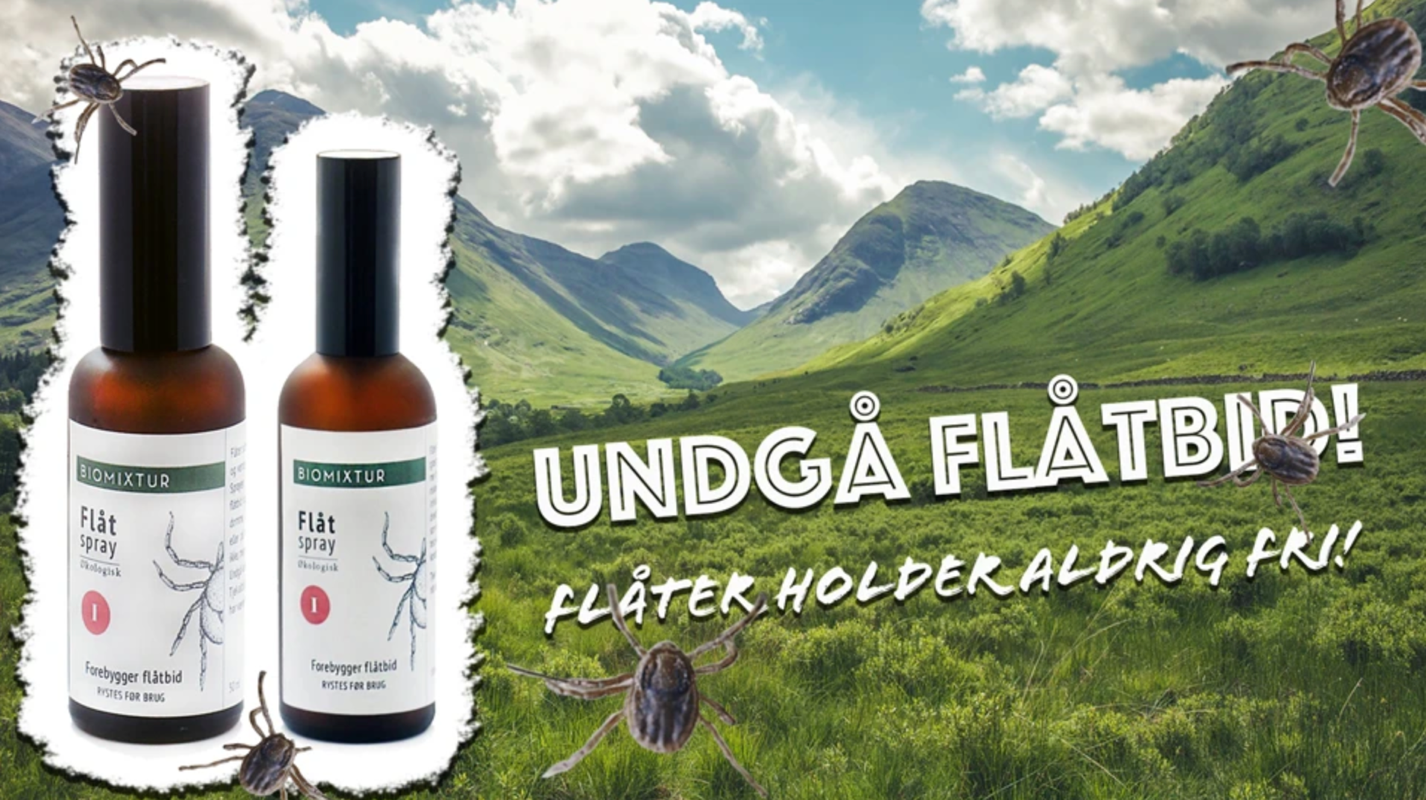
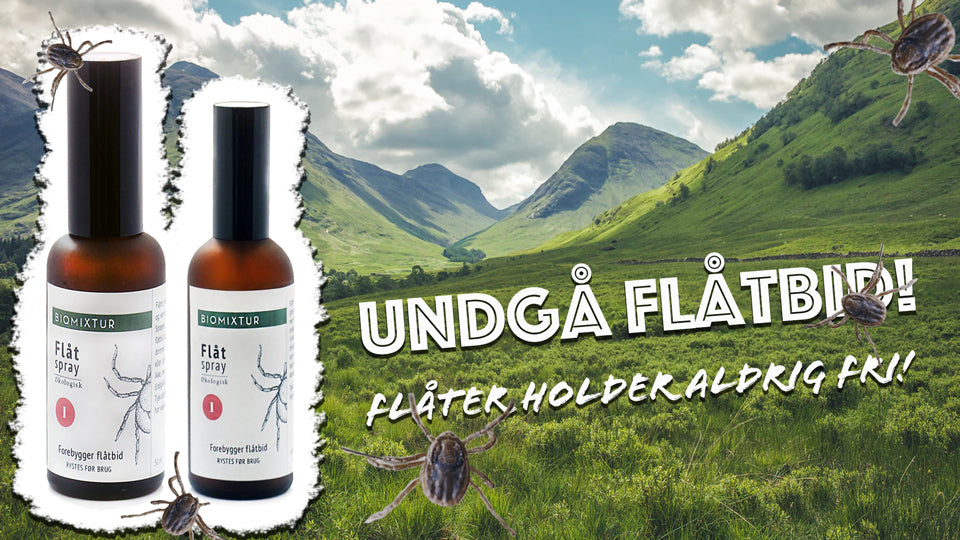
- Use tick spray on your body and clothes to scare ticks away. A tick spray works by soothing the skin, making it uninteresting to the tick.
After
- Examine your body for tick bites. It can be hard to spot a tick bite since the tick can be as small as 1 mm long. Remember to check children as well.
- Take a shower. If possible, you can take a shower afterward to examine your entire body. A tick can move around on the skin before attaching itself.
- Check your clothes inside and out for any ticks that may have attached themselves to the clothing, risking biting later. Ticks are easiest to spot on light-colored clothing.
Tip: Always consider carrying tweezers or pliers in your backpack so you can remove a tick as quickly as possible.
You can do a lot to avoid tick bites, but there is no method to be 100% sure you won’t get bitten by a tick. A tick spray and proper clothing are effective prevention against tick bites and the best you can do. But even when you have taken your precautions, it is important to check yourself and your children for ticks after a trip in nature. If you find a tick bite, the tick should be removed as quickly as possible. Preferably with tweezers, but fingers also work. Pull the tick straight out of its bite.