
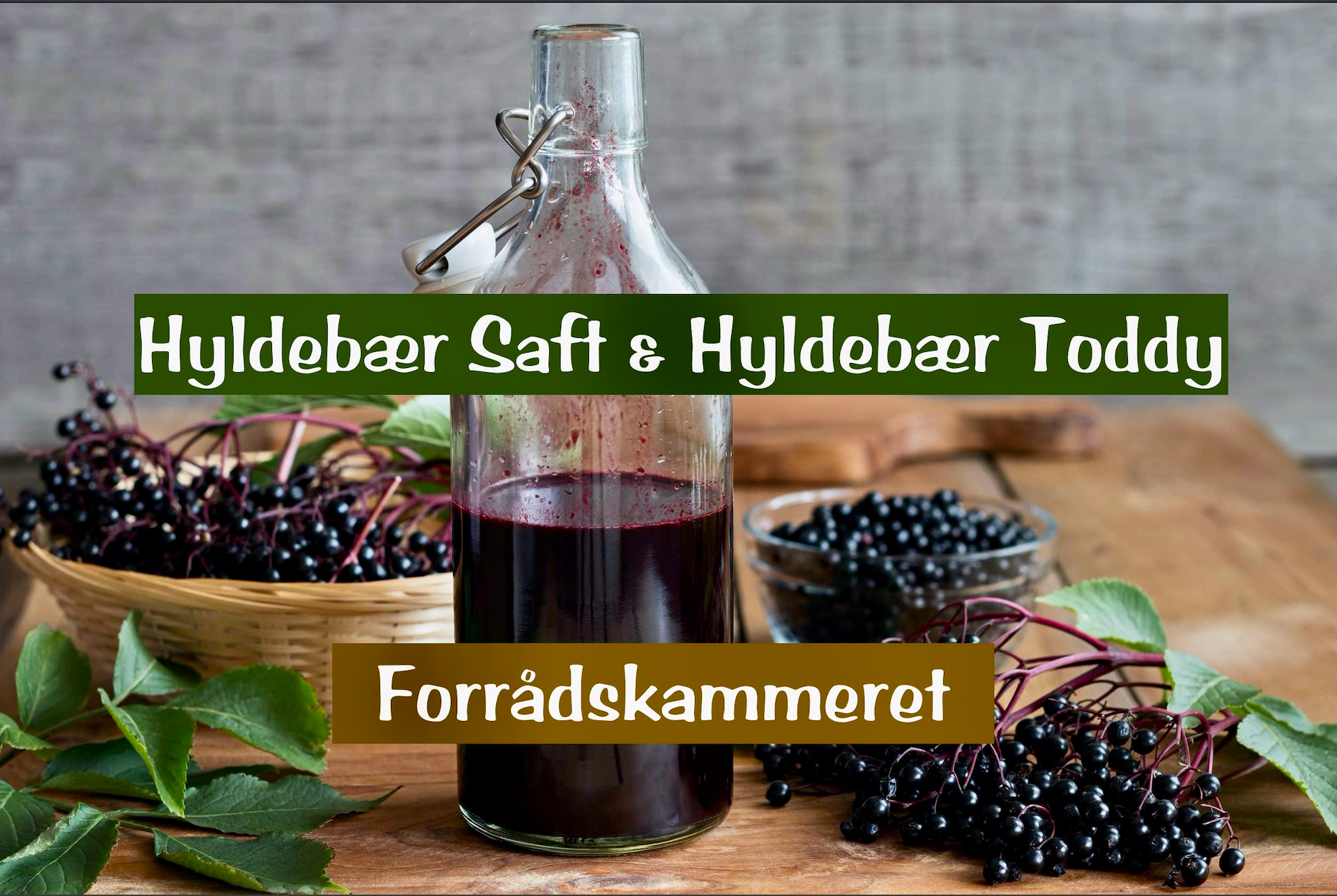
Elderberry Syrup and an Elderberry Rum Toddy - Perfect for Autumn and Winter.
Elderberries may be one of the more underrated Danish berries for many. But don’t be mistaken, they are incredibly healthy (when prepared), they taste really good, and they are easy to find, even in large quantities.
So there’s no reason to hold back, just gather freely and stock up your pantry.
Elder is an ancient well-known medicinal plant, known all the way back to the Stone Age (Ertebølle culture).
Not that we know what it was used for in the Stone Age, but from later written sources, such as Hildegard von Bingen (1098-1179), we know that elder was considered a sacred plant with health-promoting properties.
At our home, we still use elder as part of our 'home pharmacy'; when autumn colds arrive, elderberry syrup comes to the table. Not that we have any medical knowledge about elder’s health benefits, but we think it helps, and that’s good enough for us :)
We love the taste of elderberry syrup and so do our children, it’s easy to find elderberries in large quantities, it’s healthy, it’s free, so just get started.
And if you’re not so keen on elderberry syrup, it can also be made into a lovely warm elderberry toddy, which is always a sure winner, whether around the campfire or just at home in the living room.
Important when using elderberries in the kitchen
It is important that you make sure to boil the elderberries thoroughly, for at least 20 minutes, as otherwise they can contain a toxin called cyanide/hydrocyanic acid. Therefore, never eat them raw or use them in smoothies or similar. They MUST be heated thoroughly!
Leaves and stems are also toxic, so they should just be discarded or put in the compost.
Here is an easy recipe for elderberry syrup
- After you have rinsed the berries and removed the stems – place them in a pot with the apples, which are also cleaned and cored.
- Then add water and slowly bring the mixture to a boil until the berries break down. (About 25 - 40 minutes)
- Strain the mixture using a sieve or cloth, and let it drip. (It’s a good idea to use a clean cloth in the sieve to avoid very small seeds and the like.)
- Weigh the strained syrup and calculate how much sugar and lemon or lime juice to use for this exact batch.
- Then boil the syrup with the correct amount of sugar and juice, and taste it. Some berries are more sour than others, so always taste what you make before bottling it.
- If you don’t plan to drink all the syrup right away and want to bottle it – remember to sterilize the bottles beforehand so the syrup keeps!
You can do this with Atamon or vodka, but we usually preserve it by heat processing, even though we always clean our bottles thoroughly with spirits.
We preserve it in the oven as follows:
1. Pour the syrup into cleaned bottles (do NOT fill them completely), and place the bottles on a tray or baking pan, without closing them; there must be no cork or similar on.
2. Place the bottles with contents in a cold oven, which you then turn on to about 150 degrees Celsius.
3. Then keep an eye on your elderberry syrup in the oven.
4. When it starts to bubble/boil, carefully take it out and immediately put lids on the bottles.
This way, they can keep for a very long time as long as they are not opened before use. Store the elderberry syrup in a dark and cool place.
Elderberry and Rum Toddy - Tip for Adults
Instead of just mixing elderberry syrup with water, as you do with all other syrups, try warming the syrup and adding a little rum, a slice of orange or quince, and cinnamon or vanilla.
It tastes wonderfully of autumn and warms both body and soul.