Axes
67 products
Showing 49 - 67 of 67 products
Axes - How to choose the right axe?
There is a big difference between axes and which one you should choose. Your purpose, where you’re going, how strong you are, and much more play a significant role in your choice.
From experience, most people buy more than just one axe, as it’s hard to find the one that covers all your needs. Overall, the advice is that you should never go without gear and that price and quality go hand in hand – also with axes.
Therefore, you should consider the following when buying an axe
Consider whether you primarily need to make firewood for the campfire or if you also want to use your axe for other things besides that. Small or smaller hand axes are fine for modest amounts of firewood, but you need to go up in size if you really want to get something done. It could also be that you are more interested in making smaller artistic utility items. For example, a plate or a cup?
Another thing you can be sure of is that the amount of wood you burn on the fire in just one day can really surprise you. Here, you don’t want your axe to be too small.
Axe weight and your physical ailments?
Another thing you should consider when choosing an axe is whether you have any physical ailments.
It’s not immediately about how the axe feels when you briefly pick it up. It’s about how an axe feels after you’ve used it over time.
If you, for example, have recurring tennis elbow, then you definitely should not choose an axe with a heavy counterweight. (total weight of handle and axe head).
A general rule could be that you should be able to lift the axe with one arm vertically out in front of you. Now place the axe horizontally in front of you in the air, so the handle is horizontal.
For safety’s sake, make sure the axe has a blade protector on the edge!
If you can’t do that without shaking, then the axe is too heavy for you! It’s about leverage, tendons, muscles, and old injuries.
Over time, you may need to change your axe depending on your shape and physical condition. Therefore, the axe that suited you a year ago may no longer be the best choice.
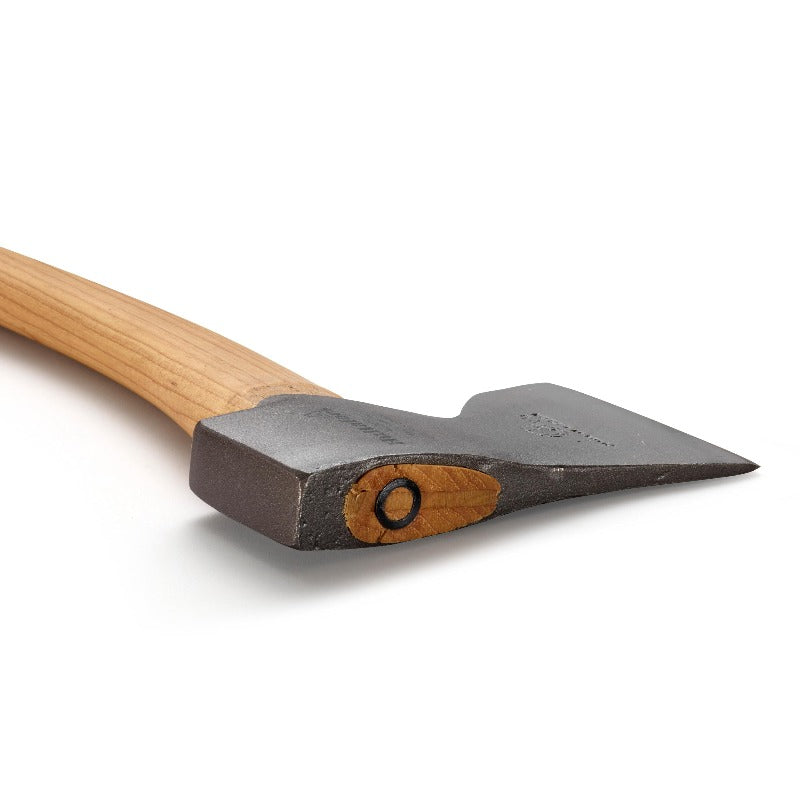
The axe counterweight, also called - the poll
The part of the axe head opposite the blade (cutting edge). Its function is to add weight to the axe and thus to your strike. It is essentially a small weight block built into the axe head. Many believe that this part of the axe can be used as a hammer without any problems.
It can do that too, if it is hardened. Therefore, it is important to check if that part of the axe is hardened if you plan to hammer with it.
If you use it as a hammer on softer things like wood, it is not a problem, but if you hit other metal, the axe will become deformed and eventually destroyed.
Do you want to use your axe for carving?
The important thing about a good carving axe
Your axe handle should not be particularly long; furthermore, your axe handle should be a bit thicker and at the same time allow for grip along the handle. You will need to be able to grip just below the axe head, and this grip should be comfortable.
The edge of the axe: (the sharp/cutting part of the axe)
Basically, you can say that a curved axe edge works best in hard wood and a straight edge cuts better in softer wood types. These two types of edges also behave differently depending on whether you work with fresh or dry wood.
So you can keep this in mind when evaluating each axe.
The carving axe or carving hatchet has a relatively short handle with a relatively heavy head. So it will be easy to pack in the bag and can bring great joy to some when time is spent on cozy axe work and carving.
An axe adds significant weight to the overall pack.
Many tend to pack heavily when going on a trip. Most trips typically involve one to two overnight stays and take place in a forest or somewhere in Denmark where you are not far from the car. Here, the weight does not matter much.
The moment you start walking, it really starts to hurt your body if the axe is too big and heavy. The handle and axe head can easily weigh up to one and a half kilos together, and if your total pack approaches twenty kilos, many will definitely feel the consequences.
The length of the axe handle
Some basic advice can be given to beginners, but it must be acknowledged that it is largely a matter of personal preference, especially for more experienced axe users.
There are mainly two things to consider:
1. Experience with using axes and thus safety
2. And your anatomy.
Although there is some truth in the statement that the longer an axe is, the safer it is, this is not entirely accurate. An axe can definitely be too long for an individual person.
The lever principle applies, as mentioned. An axe that is too long will be too hard/heavy to use for people who are not strong enough for that particular axe.
One way to measure the correct axe length is to place the end of the handle in your armpit.
With your arm fully extended, your fingers should be able to securely hold the upper part of the axe head.
There are certain cases where the use of a longer handle can be justified, such as for certain tasks like shortening and felling a large tree.
If you have problems with your arms or back and would find it difficult to stand in positions where you have to bend in these areas.
Likewise, if you are a very tall person. It should be added here that a longer axe gives less precision; it certainly places greater demands on the user. The mistakes you might make in your grip have a bigger impact where you hit. You simply hit further away from the target with a long handle.
The same applies to curved/swept handles. Most beginners can hit more accurately with a straight handle!
The absolute length of a handle should probably not be longer than your stride length.
That means if you place the axe head on the floor, you should be able to stand over the axe with the more delicate parts. If you have such a long axe handle, it is also intended for the really big tasks.
The quality of the handle and its importance
Imagine how much energy the handle is subjected to when you swing the axe through the air and the head strikes the wood. This places high demands on the quality of the wood used for the different axes. Fast-growing wood is generally bad to use because there is a large distance between the grain in the wood (what you know as growth rings).
The closer the wood grain is, the stronger the handle. Additionally, the grain should be as parallel as possible to the axe head. If the grain points the wrong way / lies across, the chances of a broken handle increase significantly.
The smaller/shorter the axe handle is, the less important the grain orientation in the handle!
You preferably want an axe with good grain orientation, but this is often not a problem on axes with handles under 60-70 cm.
Generally, it must be said that the major axe brands like Hultafors / Hults Bruk, Gräsfors Bruk are skilled at maintaining quality in this area, but you need to be very careful if, for example, you buy an axe from Jem and Fix, which is produced in China.
If you really want to nerd out and go into detail
Here are some more things you might also want to consider:
Axe handles today are generally a bit too thick and oversized.
This must be attributed to the modern person's lack of knowledge in using this tool. In the past, much slimmer handles were seen, which did not mean more broken handles. Provided the handle is of quality, properly made, and the user knows how to use it.
Many professional axe users prefer slimmer handles. The experienced axe user may not fear incorrect grain orientation in the handle as much, but rather what is called “Grain runouts.” This is when you can see the grain in the middle of the handle ending in triangular points.
This means the grain does not “run” all the way through the handle, which increases the chance of a split handle.
It should also be mentioned that the more curved your handle is, the easier it is to break. This is because the grain is simply cut during production to achieve the curve the handle has.
This can be avoided if the handle is handmade and the individual piece of wood is specially selected.
In this case, you can select a piece of wood that has the desired curve from the start. This way, the grain runs through the entire piece of wood.
That is: If you have both cross grain and runouts, then you have the worst possible handle.
Is the handle multicolored and does it affect the axe?
Basically, the answer must be no…
Sapwood, or in Danish splintved, is the outer and living part of the wood. In most trees, this is the lighter part of the wood.
Heartwood is the older/dead and darker part of the wood.
Both can often be seen on axe handles, and there is no reason to worry because of this.
It is purely a matter of your visual preference.
The handle does not lose strength, quality, or durability.
Take care of your axe handle.
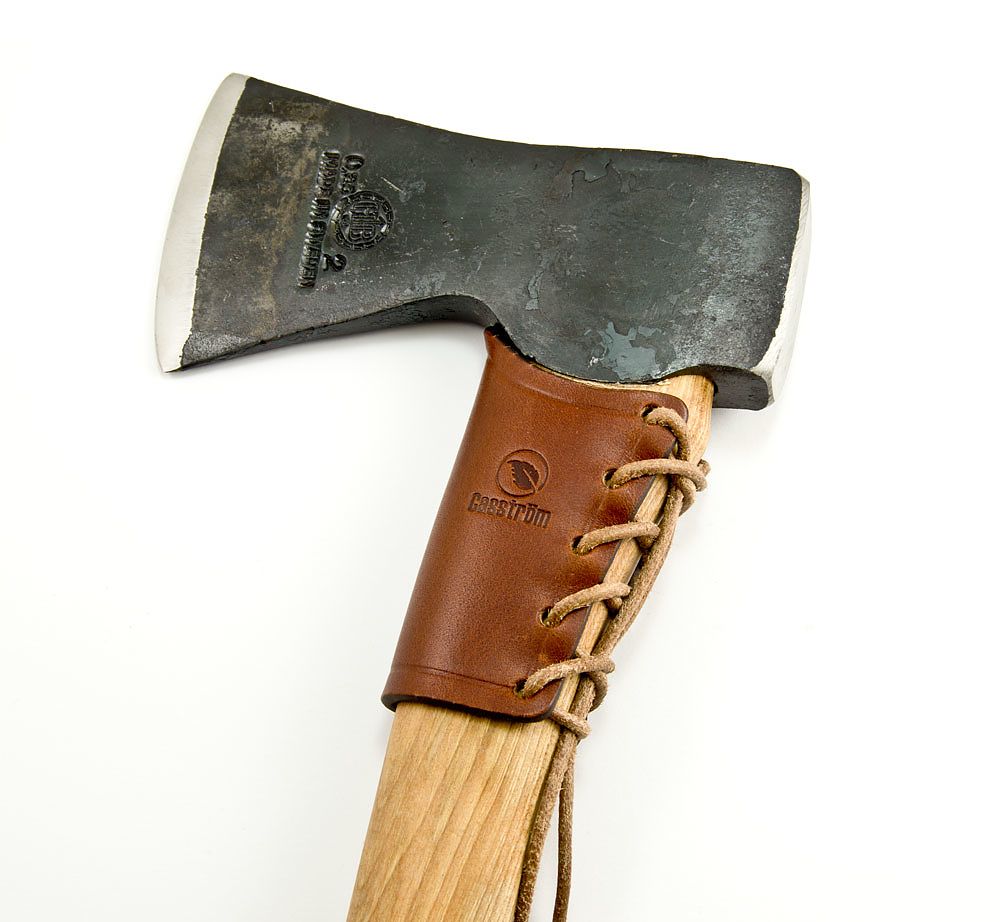
If you are not trained in using the axe, you might consider getting a leather protector for your handle. This will protect your axe handle until you gain more experience.
Many people make a classic mistake when splitting a piece of wood on a chopping block. They place the wood, stretch their arms to measure to the splitting block. Now they raise the axe and strike…
They hit the splitting block with the handle, just below the axe head.
Oh no! Now the handle is damaged. Maybe it even split.
Why? They just measured the distance.
Most people make the mistake of standing relaxed when measuring, but when they swing, they put extra force into the strike. This stretches the arms due to centrifugal force, and the axe head ends up on the other side of the splitting block.
Of course, you should practice avoiding this phenomenon, but it can be beneficial to use a handle protector in the meantime. This way, you save time and trouble replacing your axe handle.
Maintenance and preparation of a new axe:
Now I have a new axe, what next?
Maybe you're not ready to start using it yet.
Why not?
The manufacturers know that their axes are often left out in bad weather, so they try to extend the axe's lifespan.
For example, they do this by lacquering their handles, which is by no means preferable. Why do they do it if it’s so bad? you might ask.
They probably also try to avoid rust, fungus, and similar during transport and storage of the axes before sale.
This treatment of the axes, however, gives you a poor grip and likely blisters.
Use and throw away axes…
Many people choose to throw away an axe if it has damage or is too rusty. Afterwards, they buy a new cheap axe.
This is also one of the reasons why hardware stores and other shops no longer stock axe handles. No one wants to or knows how to fit or handle an axe handle anymore.
They simply throw the axe away and buy a new one.
People with this approach often find that an axe is an ineffective tool. Which is not true at all; they have simply only tried poor-quality axes :-)
If you buy an axe, it should be of a certain quality, maintained, and cared for.
Optionally strip the lacquer off the handle with a scraper; if you’re not comfortable with this tool, use sandpaper.
Afterwards, the handle is treated repeatedly with boiled linseed oil, preferably containing a siccative (drying agent/hardener).
With this type of oil, you save yourself from having to wait at least 14 days for your axe handle to dry/cure.
Good or bad factory edge?
Your axe does not necessarily have an edge ready to work in wood.
Several manufacturers make their axes with a very coarse and blunt edge. If you don’t want to spend time filing the edge to a good result, choose an axe that is ready from the factory!
It is strongly not recommended to put your axe on electric machines like belt sanders or similar.
You can ruin the hardening on your axe in seconds!
You will not be able to sharpen the axe to a good result afterward, no matter what you do!
If you are impatient or don’t want to put in the effort, make sure you understand things well before using electric tools. As mentioned, you can lose both a good axe and your savings.
Axe reshaping
If a minor reshaping is needed, use a sharpening stone. However, do yourself a favor and check what your sharpening stone requires.
Do you need to use water or oil on your stone?
Now it requires practice and skill. It is definitely recommended that you practice on a cheap axe first.
Optionally, draw some guide lines on the axe head with a marker so you have something to follow; this way, you also get the axe symmetrical on both sides.
Now move the sharpening stone in small circular motions from heel to toe on the axe head (the lower part of the edge to the top).
To check where on the edge you are filing, you can paint the edge with a marker. Focus on making the edge even on both sides.
If I need to remove a lot of material?
If you want to remove a significant amount of material from your axe head to achieve the desired result, you should use a metal file or a proper axe file.
You will also need to use a sharpening stone afterward, as the file creates small scratches. Your axe will definitely deliver the best cut and release the wood most easily if the edge/bevel is polished smooth.
This is especially important if you are making fine utility objects, as these scratches can be visible on the surface of the wood you have worked on.
It can be helpful to mask the axe head with strong tape or similar. This way, you avoid scratches on the rest of the axe head.
Clamp the axe head in a vise or similar.
Take care of yourself! You now have a sharp tool pointing toward you. Consider wearing gloves!
Minimize accidents with axes
First and foremost, you should ALWAYS ensure you have a solid, stable base when splitting wood with axes. A tree stump is clearly the best, as it rarely moves. Kneel with your legs slightly apart and as far from the stump as possible with your knees, and you’re on the right track.
If the axe slips, in most cases it will cut into the stump and thus not hit your legs. Avoid using logs that lie freely as a base. They tend to move when you chop, or they slide off and swing out to one side. If you are standing, the direction will be toward your shins. You don’t want that!
Finally, regarding safety, I want to mention that you must never, ever, in a million years use an axe AFTER dark. That is one hundred percent a no-go.
How to pack your axe for the trip
If the axe has a leather sheath / blade guard, which is recommended, it can be packed inside the backpack. Make sure it is packed as close to your back as possible. Consider whether to position the head up or down, depending on the overall weight distribution.
If centered, you will get an even weight distribution, unlike carrying it on the outside of your backpack. Many bags have side pockets and straps where you can securely attach axes and other gear. Be aware of balancing the weight with other gear on the opposite side.
Modern backpacks offer many options for carrying axes; various straps, bindings, etc., provide many possibilities.
Hand-forged axes are the most beautiful
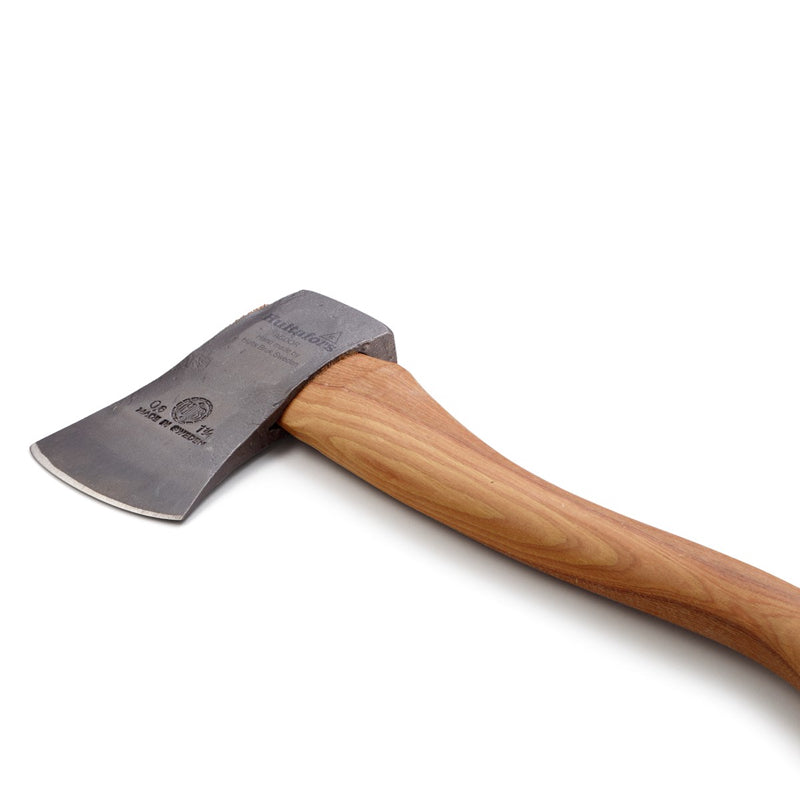
For hundreds of years, Swedes have produced hand-forged axes, and they are really good at it. When made by hand by an old and experienced blacksmith, you get a quality and appearance unlike anything else.
Hand-forged axes are not all the same! Surface and texture can vary quite a bit. Each hand-forged axe is unique, and that’s part of the charm. You can “sense” the individual axe smith’s skills, process, and preferences when you hold the axe.
Of course, you pay for all this, but you also get an axe you can keep and be happy with for life.
If you buy one of the cheap axes at Jem and Fix, you rarely get a blade protector, and it’s usually so poor quality that you’ll quickly need a new, better one.
Quality axes almost always come with quality blade protectors.
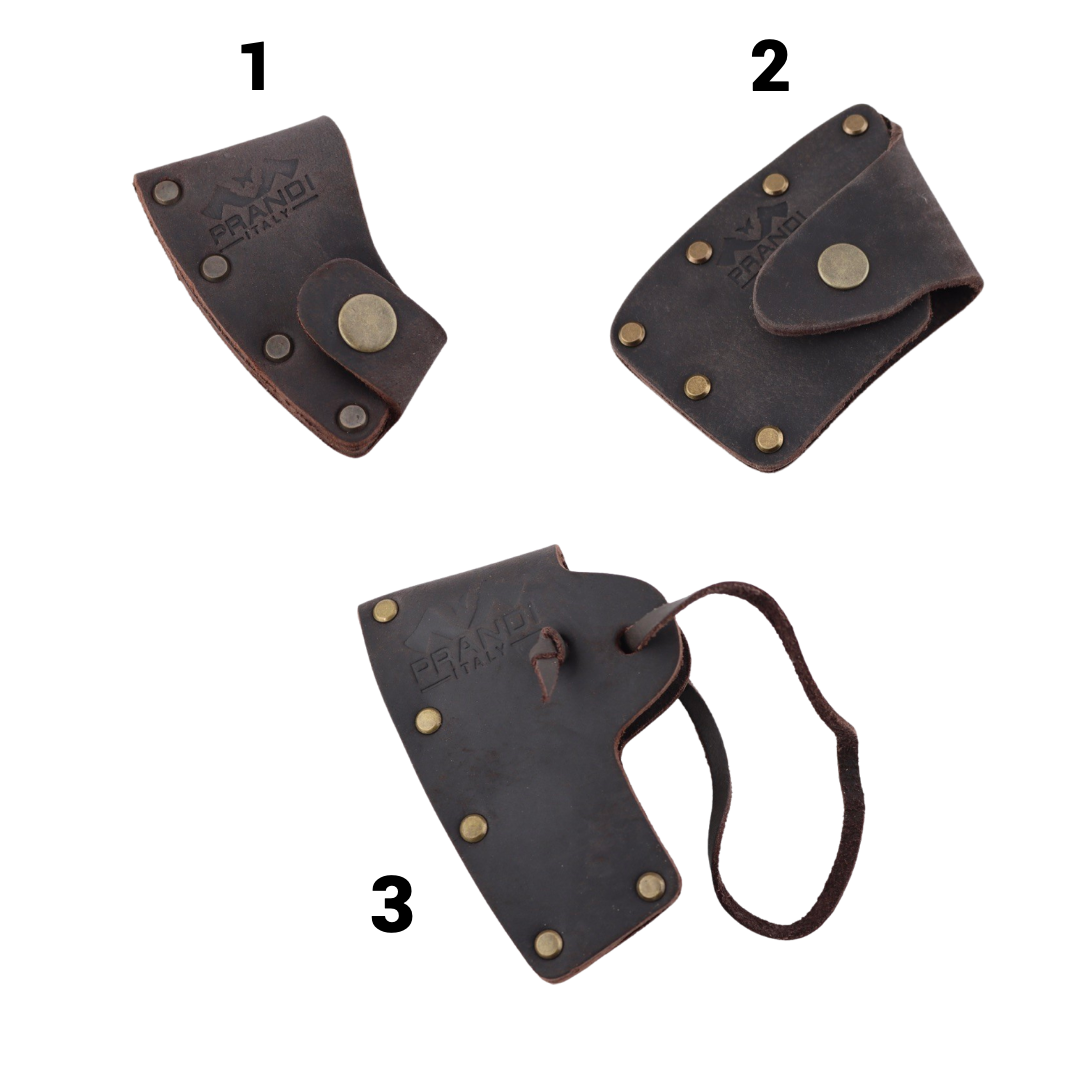
Sturdy leather sheaths
If you buy one of the cheap axes at a hardware store, you rarely get a sheath. That makes it tricky to pack and carry on trips. How are you supposed to bring it if you’re constantly risking cutting yourself? It’s practically impossible. On top of that, you’ll easily cut holes in your bag, clothes, and whatever else you carry.
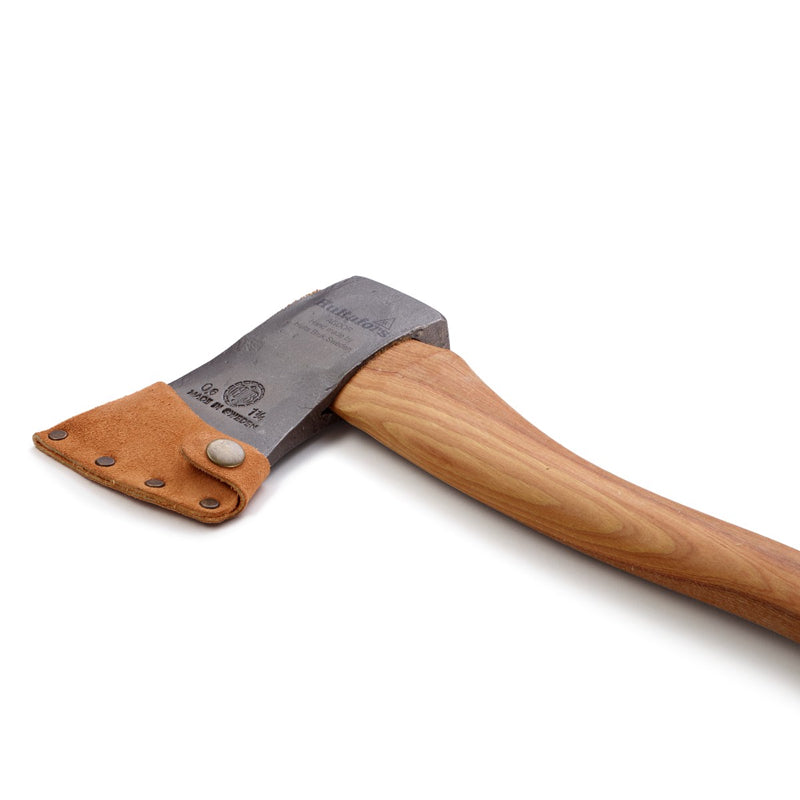
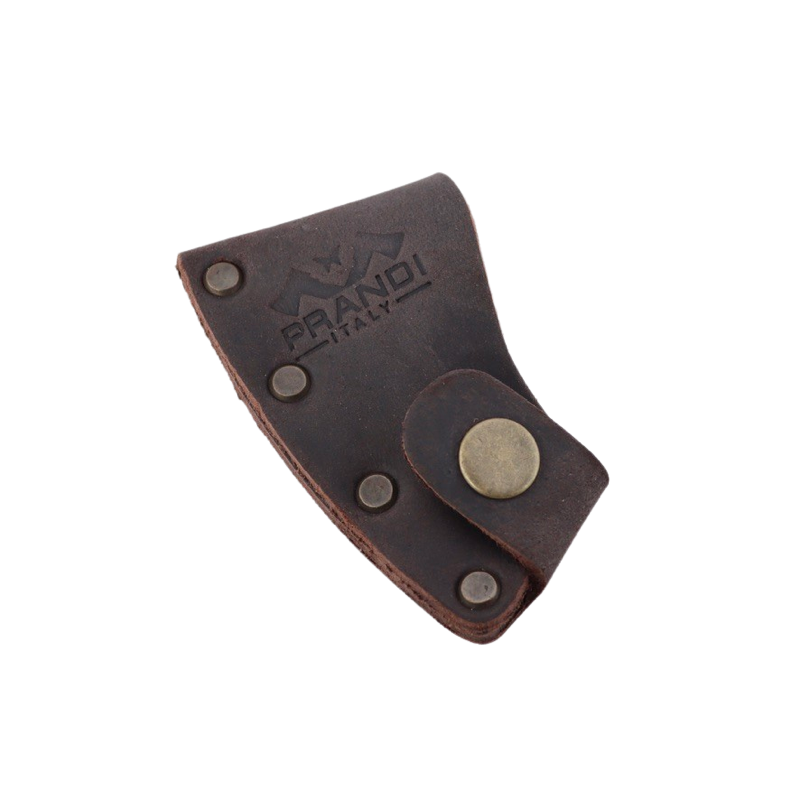
Most of our axes come with sturdy leather sheaths that protect both you and your gear when you’re out and about. That’s definitely something you should consider.
Axes are just awesome!
Axes in all sorts of forms have helped drive humanity forward; it’s not that many years ago that various axes were a staple in the carpenter’s toolbox, inspiring many designs like carpenter’s axes, broad axes, and so on.
It’s just one of those things that makes axes wildly fascinating.
Read about the history of the axe HERE
Our favorite axes
-
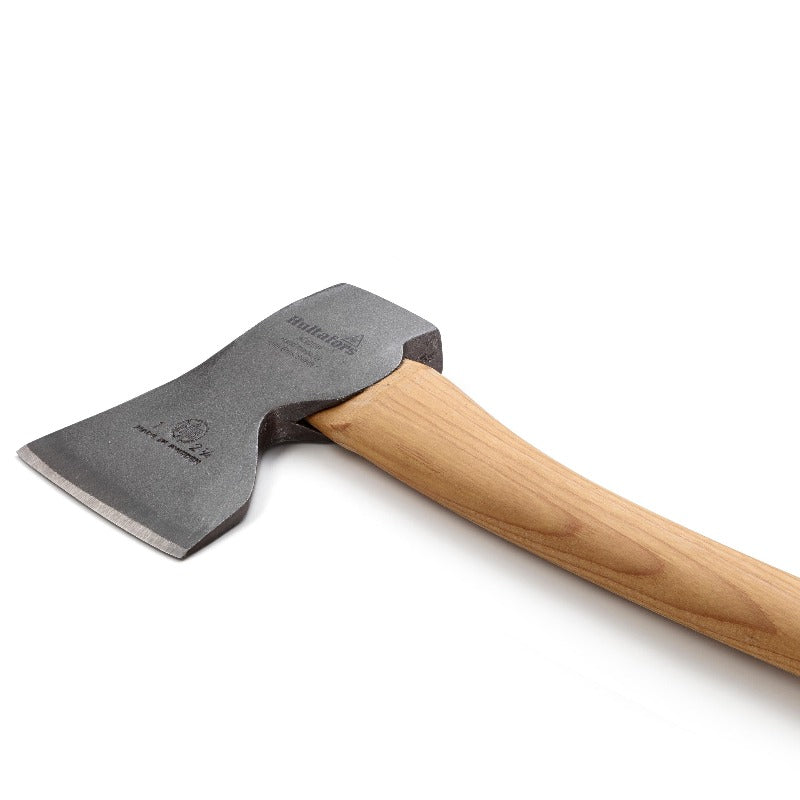
Ågelsjön mini hand axe - a very popular axe that’s really great for small projects and easy to take along on trips.
-
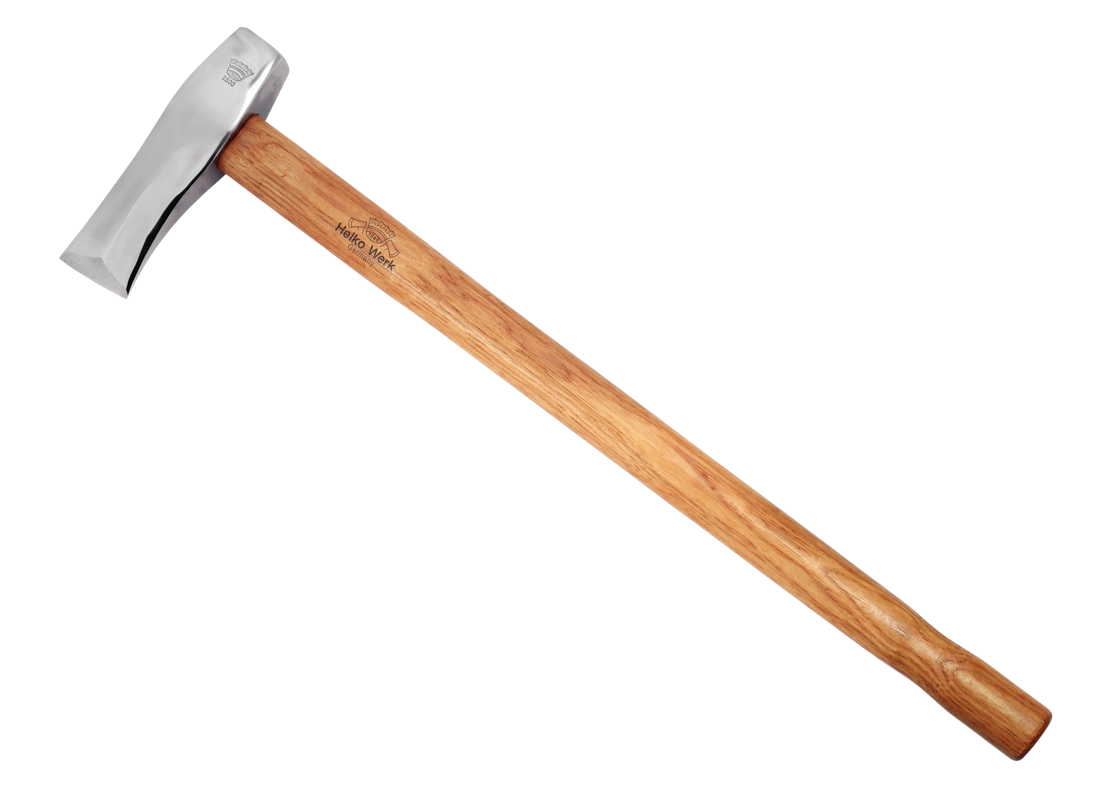
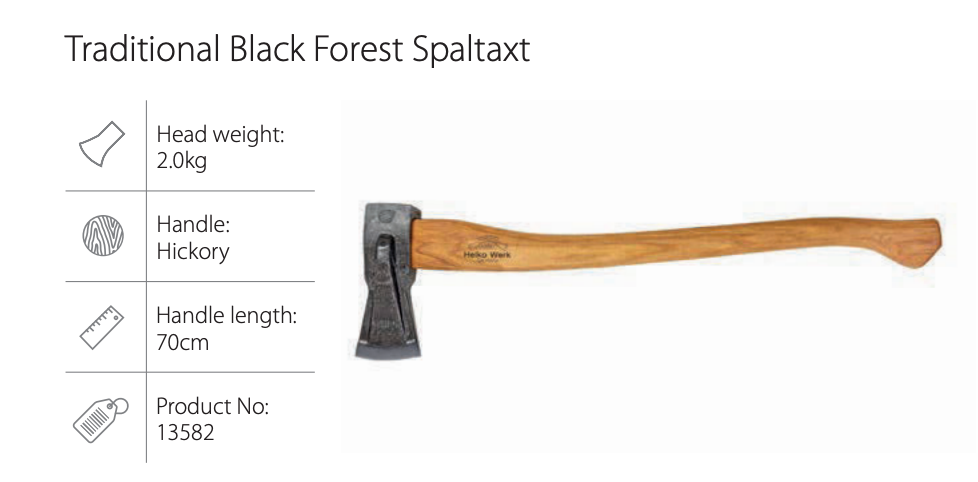
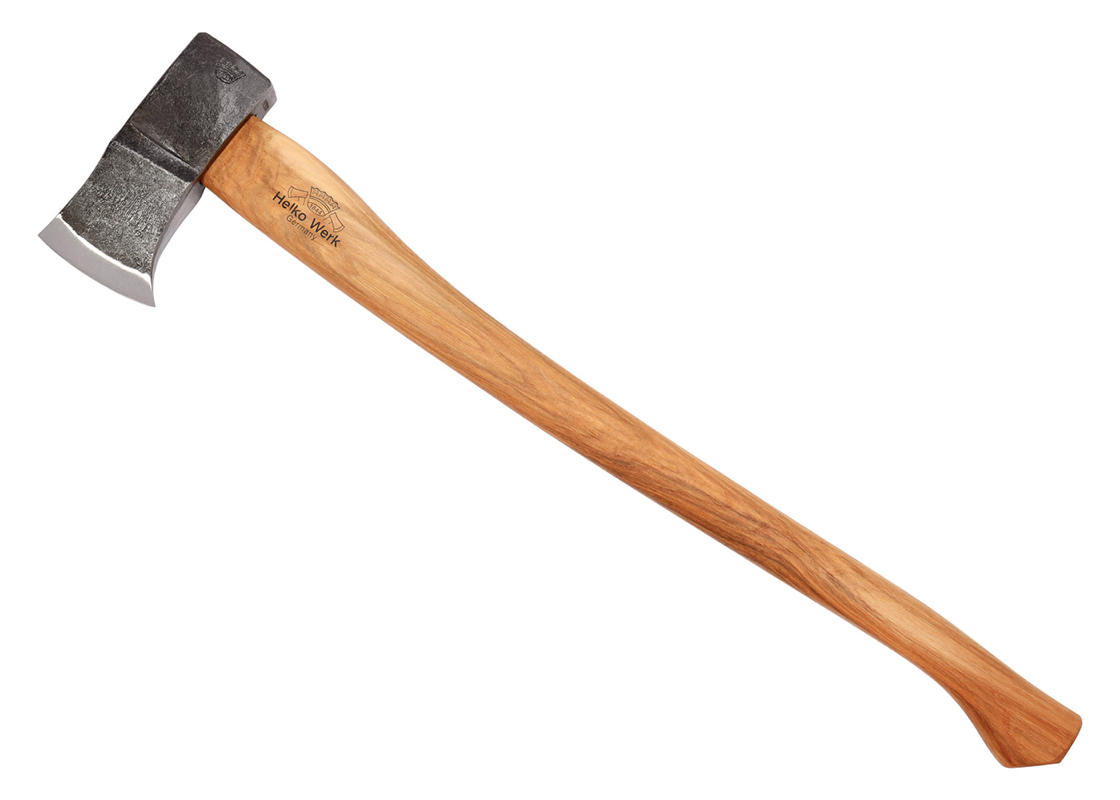
Hult splitting axe - a lovely hand-forged piece that makes splitting firewood a breeze
-
The Hunting Axe – It is hand-forged, beautiful, and has a really good length and size overall.
-
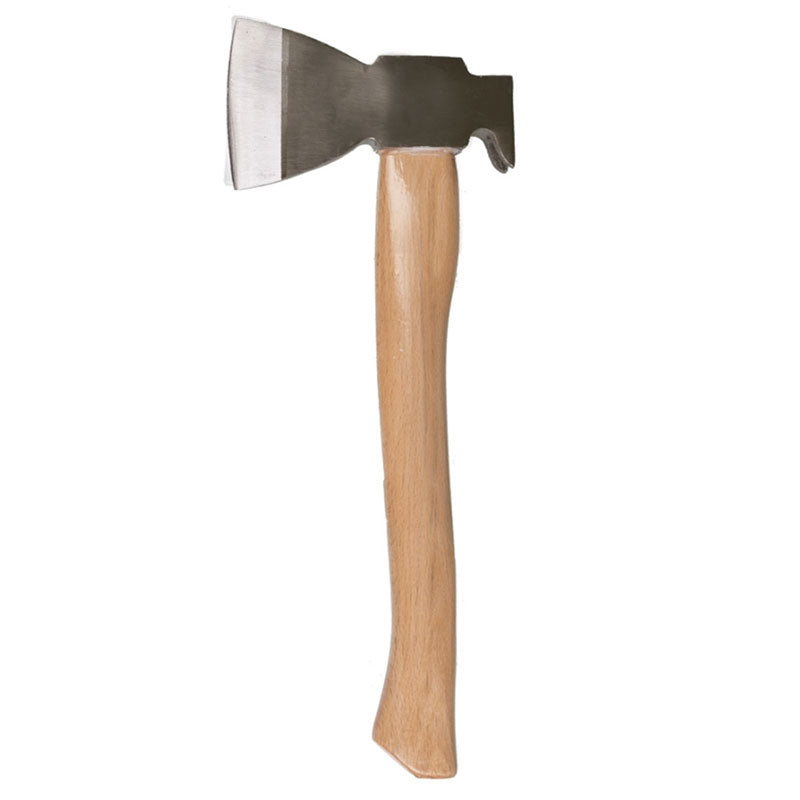
The Carpenter's Axe – Brilliant for all carving work and actually quite decent for firewood too.