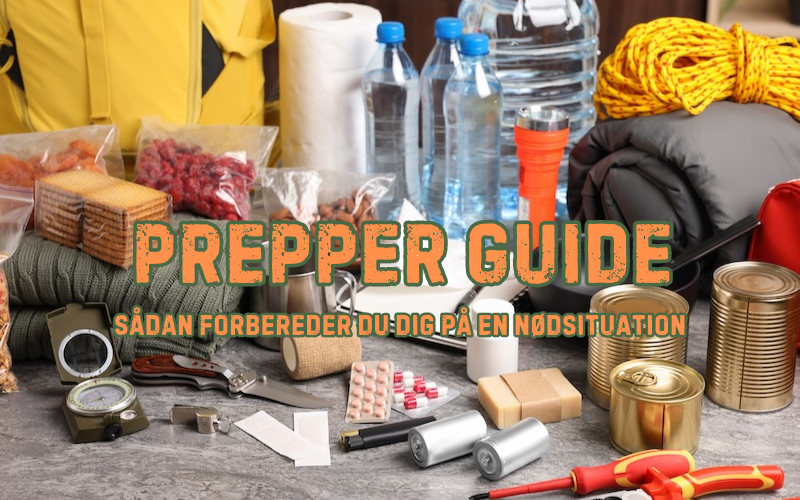
Prepper Guide
How to best prepare for sudden emergencies
Have you ever thought about what you would do if the power went out, the water supply stopped, or another unforeseen crisis hit the community?
In such a situation, having a well-functioning home preparedness plan can be crucial to securing the basic needs for you and your family to survive.
"Prepping" is short for "preparation" and refers to preparing for various unforeseen events. When prepping, it typically involves taking proactive steps to ensure that you and your family can cope under different scenarios – for example, natural disasters, extreme weather conditions, pandemics (e.g., Covid-19), financial collapse, social or political crises, supply interruptions, security threats, environmental disasters, and more.
A home preparedness plan can consist of many different measures, precautions, and arrangements designed to protect you if necessary.
💡 Prepper tip
Prepping and home preparedness are about being proactive and taking precautions to ensure your safety and well-being in case of an emergency. Prepping can include everything from packing a well-equipped backpack to having a survival kit at home.

As outdoor enthusiasts, we are used to handling challenges in nature. We can use the same mindset when prepping our homes and families.
If you are going on an outdoor trip, maybe a longer expedition, you will probably pack all necessities to ensure you can handle the trip. Your survival depends on having all the provisions and gear you need and whatever else you require. There are many things to remember and keep in mind when packing for an outdoor trip, and the same applies if you are prepping a solid home preparedness kit for sudden emergencies.
💡 Prepper tip
You can participate in the Crisis Preparedness Course where you learn EVERYTHING about prepping, home preparedness, and the skills you need so that you and your family can manage shorter or longer periods without outside help.
Bushcraft Denmark offers a really good crisis preparedness course - see more about it here!
Why is home preparedness important?
Protecting you and your family: In a crisis situation, it can be difficult to get help from the authorities. Home preparedness allows you to take care of yourself and your family until help arrives.
Creates security: Knowing you are prepared for the unexpected can give you a sense of security and calm in a stressful situation.
Reduces dependence on others: Home preparedness makes you more independent and less reliant on help from others in a crisis.
What is a prepper?
A "prepper" prepares to survive if society "collapses" and everyday necessities are no longer available. – What do you do, for example, if no water comes out of the tap, or there is no electricity in the outlet due to failures in water and power plants? – Or if it’s not possible to go to the supermarket to buy rye bread and soap?
A prepper uses common sense to prepare to be self-sufficient without outside help.
What can you do to get started with prepping?
When you start as a prepper, it may seem extensive and overwhelming. However, it doesn’t have to be – prepping is what you make of it.
A good place to start prepping is to have or create a prepper plan where you get an overview of your needs and priorities.
Start small: You don’t need a large and expensive emergency kit to get started. Begin by making a plan and acquiring the most basic items, such as food, water, and a first aid kit.
Adapt your preparedness to your needs: When prepping, consider which types of crises are most likely in your area, and adjust your preparedness accordingly.
Stay updated: Follow the news and be aware of potential warnings in your area.
Share your plan with your family: Make sure everyone in your family knows what to do in a crisis situation.
As a prepper, there are some important things you can do or consider. We have divided it into different topics, which we cover here in the Prepper Blog.
By clicking the link to the different topics below, you will go directly to the subject.
Prepper Guide:
We start here by diving into the first topic in this prepper blog, namely supplies, emergency rations, and long-lasting food in your home emergency kit.
Supplies, emergency rations, and long-lasting food:
Regarding food and supplies in a home emergency kit, it is important to ensure you have enough provisions to cover your and your family's needs in an emergency.
Here are some key points to consider when prepping your supplies:
Choose foods with a long shelf life, such as canned goods, dried beans, rice, pasta, and freeze-dried food like field rations. Regularly check expiration dates to ensure the food remains fresh. Choose foods that are easy to prepare and require minimal water and energy.
Ensure that you have as varied a diet as possible, containing proteins, carbohydrates, fats, vitamins, and minerals. You may consider including multivitamins to ensure you get all necessary nutrients.
When prepping provisions, it can be a good idea to include nuts, crackers, dried fruit, and energy bars in your supplies for quick and easy energy sources. Also, consider any allergies or special dietary needs in your household, and think about including special foods for babies and pets.
Make sure to have a camping stove with a gas burner and gas or an emergency stove and fuel available if electricity is not accessible, and also remember utensils for cooking and cutlery.
Have at least 3 liters of water per person per day for drinking and hygiene, and include water purification tablets or water filters to ensure access to clean water.
Example of food and provisions for home emergency supplies:
Protein sources: Canned meat, beans, lentils, nuts, and protein powder.
Carbohydrates: Rice, pasta, oatmeal, grains, crackers, cereals, and crispbread.
Vegetables and fruit: Canned vegetables, fruit in syrup or juice, dried fruit.
Fats: Cooking oil, nuts.
Beverages: Water, juice in cartons, tea, coffee.
When prepping provisions, food should be stored in a cool, dry, and dark place to extend shelf life, and use airtight containers to protect against pests and moisture.
Choose long-lasting food and provisions as supplies in your home emergency kit.
There are many different foods and dishes that have a long shelf life.
Remember to regularly review your stock and check expiration dates.

You can advantageously prep your home emergency supplies with freeze-dried food and field rations - it is long-lasting, easy to prepare, and takes up little space.
First aid kit:
An acute crisis situation can limit access to medical facilities. With a first aid kit in your home emergency supplies, you and others can provide basic medical treatment until professional help becomes available. For a prepper, this is an important part of being able to manage independently in a crisis.
A well-equipped first aid kit is therefore essential to effectively handle minor injuries and emergencies. This list can be a good starting point when prepping your first aid kit:
Basic supplies
Plasters in various sizes: For small injuries and wounds.
Sterile compresses: For larger wounds.
Bandages: Elastic bandages to support sprained or strained muscles and joints.
Triangular bandage: Can be used as an arm sling or to secure bandages.
Tape: Medical tape to secure bandages and dressings.
Disinfection and cleaning
Disinfectant wipes or solution: For cleaning wounds.
Antibacterial ointment: To prevent infection.
Hand sanitizer: To ensure clean handling of wounds.
Tools
Scissors: To cut bandages and clothing.
Tweezers: To remove splinters or foreign objects.
Disposable gloves: To help prevent infection, among other things.
Safety pins: To secure bandages.
Pain relief and medication
Pain relief medication: Such as ibuprofen or paracetamol.
Antihistamines: For allergic reactions.
Gastrointestinal medication: Such as Imodium and Imolope.
Personalized medication: If someone in your group has special medical needs.
Special supplies
Face masks: To prevent infection and for safe handling of injuries.
Emergency blankets: Also known as a shock blanket or rescue blanket, which protects against wind and weather and helps prevent shock for the injured person.
Hot/cold gel packs: For treating muscle injuries.
Blood pressure monitors: To monitor blood pressure if necessary.
Documentation
First aid manual: A small book or guide with basic first aid advice.
Personal health information: Contact details, allergies, and medical conditions for all people in the group.
Extra supplies
Headache pills
Anti-nausea medication
Hydrocortisone cream: For insect bites and rashes.
Eye wash solution: To clean eyes from dust or chemicals.
Thermometer: To measure body temperature.
By having a well-equipped first aid kit as part of your home preparedness, you as a prepper can be sure that you are ready to handle many of the medical challenges that may arise in an emergency. It not only helps yourself and your own safety but also provides security and safety for those you care about.

💡 Prepper tip
A well-equipped first aid kit can make a big difference in emergencies—not just in your emergency preparedness but also on your outdoor trips. Make sure to review and update the contents regularly so it is always ready for use.
Self-sufficiency:
As a prepper, you can be self-sufficient by growing your own food, raising livestock, and finding alternative energy sources.
Self-sufficiency can be an important part of prepping and is about becoming more independent and less reliant on others to meet your basic needs. In an emergency where access to food, water, energy, or other supplies may be limited, self-sufficiency skills can prove invaluable.
Here are a few ideas for self-sufficiency in your emergency preparedness:
Grow your own food: Even a small garden or a few pots with herbs can provide fresh vegetables and spices for your diet. You can also grow fruit, berries, or even durable crops like potatoes and grains.
Store water: It is important to have a reserve of drinking water available in case of an emergency. You can store water in jugs, bottles, or even a rainwater container.
Learn to preserve food: Preservation is a good way to extend the shelf life of your homegrown or purchased foods. You can preserve by pickling, drying, or salting food.
Get renewable energy: Solar panels and wind turbines can give you access to electricity even when the power grid is down.
Additionally, installing solar panels and collecting rainwater provides security that you can maintain a basic level of comfort at home, no matter what happens. Self-sufficiency is not just about survival but also about ensuring a sustainable and independent lifestyle that can protect you and your family from uncertainties in the future.
Self-sufficiency is not for everyone, and you can also manage without being able to preserve food or filling your backyard with solar panels or a wind turbine. Remember that your emergency preparedness should fit you and your needs.
Your preserved vegetables and legumes don’t have to come from the kitchen garden!
You can also go to the supermarket and find fresh vegetables to take home and pickle or preserve to extend their shelf life.

When you prep, it's about becoming less dependent on outside help. Therefore, the concept of "self-sufficiency" can become essential when you prep.
If self-sufficiency is something for you, or if you want to dive deeper into this prepper topic, we recommend, among other things, looking at this book, which can surely provide you with a lot of useful knowledge in the area.
💡 Prepper tip
Remember to write the date on your home-canned foods and regularly check the expiration date on your emergency food supplies.
Skills:
Besides self-sufficiency, as we mentioned in the previous section, there are many other skills that can be useful for a prepper to be able to manage independently and effectively in various emergency situations.
Here are some ideas for skills a prepper can use:
First aid and lifesaving: Knowing how to provide first aid and save lives can be critical in an emergency. You can take first aid and lifesaving courses at, for example, Falck or another relevant organization.
Navigation and orientation: In an emergency, it can be useful to find your way without using modern technology. You can learn to navigate using a map and compass, or by using other natural landmarks.
Outdoor skills: The skills you may already have from outdoor life, such as making and lighting fires, building shelters, navigation, finding and purifying water, foraging for food in nature, and similar, can be crucial in an emergency. Being aware of dangers in nature and knowing how to avoid them is essential. You can also learn about wild animals, poisonous plants, and dangerous weather conditions.
Building and repair skills: Being able to repair your home or make simple constructions can be useful in an emergency. You can learn basic carpentry, masonry, and plumbing skills by consulting your local craftsmen or searching online.
Growing plants and vegetables: You can learn to grow vegetables, fruit, berries, and herbs in a garden or in pots. This makes you less dependent on having to go to the supermarket for these foods.
Hunting and fishing: Meat and protein are an important part of a varied diet. You can hunt and fish to gather food this way. Remember to obtain the necessary licenses and permits, and learn to hunt and fish responsibly and sustainably.
Food preservation: Preservation is a good way to extend the shelf life of your homegrown or purchased food. You can preserve by pickling, freezing, drying, or salting food.
Crafts and manufacturing: Being able to make your own tools and gear, clothing, and other items can be useful when prepping. You can learn to knit, crochet, sew, forge, or do other types of crafts.
When prepping, the most important thing is to focus on the skills that are most relevant to your specific situation and environment. Start by learning the basic skills, and gradually build your abilities over time. There is a lot of help available online and in your local community that can assist you in learning the skills you need.
We also recommend Bushcraft Denmark’s Crisis Preparedness Course, where you learn everything about prepping so you and your loved ones can manage without outside help for shorter or longer periods.
Prepper Gear:
Now we have covered a bit about provisions and emergency rations, first aid, self-sufficiency, and which skills are good to have when you prep.
It is essential to have good gear to be independent of outside help.
Here are some tips on what gear you as a prepper can have in your home preparedness kit:
Food and drink:
- Sealed containers or water purification systems for storing water.
- Camping stove or emergency stove and fuel for cooking your food.
First aid:
- First aid kit with bandages, dressings, medicine, etc.
- Thermometer, scissors, tweezers, and other medical tools.
- Medicine for common ailments such as painkillers, allergy medicine, and anti-diarrhea.
Warmth and protection:
- Blankets or sleeping bags to keep warm as well as possibly sleeping pads and a thermal blanket.
- Tent or tarp for weather protection – also remember stakes and guy lines.
- Flashlights, headlamps, and extra batteries for lighting.
- Emergency whistle, mirror, or signal panels for emergency signaling.
Tools and equipment:
- Multitool, hammer, and knife to handle a wide range of tasks.
- Paracord or rope for tying and repairs.
- Lighters, matches, or fire steel for lighting fires.
Communication and information:
- Emergency radio to receive distress signals and updates.
- Mobile phone with chargers and solar charger.
- Copies of important documents like IDs, insurance papers, and contact information.
Personal needs:
- Extra clothes and shoes for changing weather conditions.
- Personal hygiene products and sanitary items.
- Extra glasses or contact lenses.
- Cash for any emergency expenses.
Other equipment:
- Fishing gear and hunting tools to procure food.
- Portable solar panel or generator to charge electronic devices.
- Emergency raft or inflatable boat for evacuation in floods or other water damage.
Yes, the list is long 😅 and these are just some ideas of what gear makes good Prepper Gear.
Of course, you choose how much of a "Prepper" you want to be.
Maybe you can find some of the most important items for your home preparedness right here.
💡 Prepper tip
It can be a good idea to have packed a backpack with "the essentials" so you can manage for a few days. Keep track of where your important documents and any medication are, so you can easily access them if you need to find a place to stay other than your home.
The prepper lifestyle:
In a world full of uncertainties and potential crisis situations, many have gradually chosen to embrace the prepper lifestyle.
Previously, many saw a prepper as paranoid and extremely focused on apocalyptic scenarios, believing the end of the world was imminent. -That may still be true for some preppers, but prepping has recently become more accepted and normalized.
While some preppers prepare for extreme disasters, most also prepare for more common emergencies like natural disasters, economic crises, and power outages.
Media coverage of natural disasters, pandemics, and other crisis situations has also increased awareness of the need for preparedness. When people see the effects of hurricanes, earthquakes, wildfires, and pandemics like COVID-19, they realize the importance of being prepared.
Many governments and relief organizations also recommend that citizens have an emergency supply. These recommendations likely help normalize prepping and make it seem more like a sensible and responsible practice rather than an extreme lifestyle.
Being a prepper is an individual thing! An extreme prepper does it to secure themselves in their own way, and if you want to take a more moderate approach when prepping, with various small steps like building a stockpile of emergency rations, learning basic skills and survival techniques, and being aware of potential risks, then you are already well on your way to making a big difference in your own home preparedness.
A top recommendation from us is the book 'Prepare Yourself Best for the Worst' – an exciting and in many ways timely book that equips you well if a societal crisis of some degree arises.
Susanne Skov Diemer is security and intelligence expert. She makes a living advising companies, organizations, governments, and private individuals on crisis and disaster management, as well as security.
With the book 'Prepare Yourself Best for the Worst', she gives you her best advice on how you can prepare yourself and your family for situations like cyberattacks, terrorism, viruses, war, natural disasters, and more.
She explains how to conduct a risk assessment and how to act on it.
Now we have covered the essential elements that a prepper needs to know. How much you prep and what you prep for is entirely individual, but it can be a sensible measure to have a home emergency supply in case of sudden emergencies.
In a world of uncertainty and constant change, being prepared is more important than ever. Prepping is not about fear or paranoia, but about taking responsibility for your own and your loved ones' safety and well-being. It is about having a plan, having the necessary resources, and being able to act quickly and effectively when it matters.
Being a prepper is not just about collecting supplies and gear. It is just as much about having a positive attitude, strong will, and the ability to adapt. Being a prepper is about being proactive.
Whether you live in a city, the countryside, or somewhere in between, there are things you as a prepper can do to become better prepared. Start by making a plan for your family and yourself. Consider the risks you face and identify the resources you need to handle them. Then begin gradually gathering supplies and equipment.
Whether you are a new prepper or an experienced prepper, it is important to remember that preparation is an ongoing process. By investing time and resources in your emergency preparedness, you can ensure that you and your family are better equipped to handle a crisis situation.
We hope this blog has given you insight and inspiration to take the next steps in your prepper journey. Remember to review and update your preparedness regularly, and be open to learning new prepper skills. With the right mindset and preparation, you can create safety and security for yourself and your loved ones.
Thank you for reading, and we look forward to sharing more tips, tricks, and information about prepping with you in the future.
Below you will find a Prepper Checklist with some of the most important items you as a prepper can have in your home preparedness.
We hope this Prepper Guide can be helpful if you are considering becoming a prepper or want to upgrade your home preparedness.
Prepper checklist:
- Water and water containers (3 liters of water per person per day).
- Water filters and water purification tablets.
- Freeze-dried food and long-lasting food, e.g., packed in field rations.
- Camping stove, gas burner and gas canister, cutlery, and cooking utensils.
- Solar chargers, batteries, and power banks.
- Lighter, matches, and fire starters.
- Candles and flashlight.
- Warm clothing.
- Blankets, sleeping bags, and sleeping pads.
- Cash.
- Passports and important documents.
- Fuel.
- First aid kit.
- Hygiene items, diapers, and toilet paper.
- Medicine.
- Emergency radio.
- Gear and tools like knives, multitools, ropes, and tape.
- Firewood.
- Trash bags, wet wipes, hand sanitizer.
You might also find useful prepper gear below 👇
Or see even more prepper gear for home preparedness here