
A guide to foraging June’s wild ingredients
June is the perfect month to go foraging – now marks the transition from spring to summer – the days are long, the light is high, and nature is in full bloom. It is now that many wild herbs, flowers, and berries peak in flavor.
Where spring foraging was about fresh shoots and tender leaves, June offers fragrant flowers, aromatic herbs, and the first sweet taste experiences in the form of berries and flowering fruits.
The meadows are full of blooming herbs, the forest floor is lush with green, and the roadsides are like small pantries themselves. Many of the plants we foraged in May can still be found – but now they are joined by new flavorful plants like meadowsweet, chamomile, St. John’s wort, and the first wild strawberries.
June is a perfect month to go foraging – both for those new to the wild world and for those who know the paths by heart. Fill your foraging basket with flowers and leaves, plants and herbs, and enjoy nature’s abundance.
Wild strawberry (Fragaria vesca) – Sweet, wild summer flavor in mini format
Wild strawberry is one of summer’s most beloved wild berries – small, intense, and full of sweetness and aroma. In June, the first ripe berries begin to appear among the serrated leaves and white flowers, and it is precisely now that you can gather the small red jewels from the forest floor and hedges. Wild strawberries taste like a concentrated version of regular strawberries – and rarely live long enough to make it home in the basket.
Both berries and leaves are edible, and the plant has a long tradition as a wild edible in Denmark.

Where is it found? Wild strawberry grows in open forests, forest edges, hedges, slopes, and along paths. It prefers well-drained soil and some shade, and is found in both deciduous and coniferous forests. You can harvest the first ripe berries in June – especially in warm, sunny spots – and the berry season typically extends into July.
How to recognize it? Wild strawberry is a low, creeping plant with trifoliate leaves – matte green and serrated – and white, five-petaled flowers. The berries are small, conical, and deep red, with seeds lying on the surface. The scent is strongly strawberry-like and sweet. The plant spreads by runners and often grows in mats.
How to use it: Harvest the berries fresh and eat them as they are – or use them in desserts, fruit salad, jam, or as decoration. The flavor is intense and sweet with a deep aroma that doesn’t tolerate harsh cooking – they are best raw or gently stirred. The leaves can also be used, both fresh and dried, for tea with a mild strawberry flavor. Only pick ripe berries, and avoid places with heavy traffic or dog walking when foraging.
Rosehip (Rosa rugosa) – Fragrant petals and fruits with sun and acidity
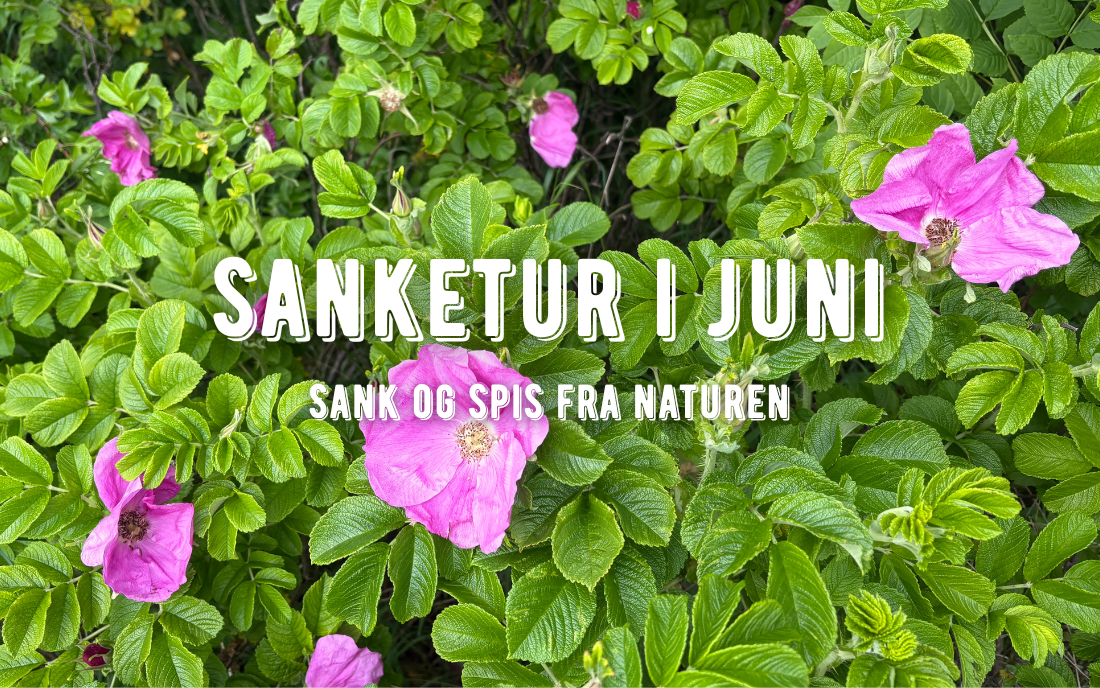
The rose hip is one of the most recognizable and sensory plants of summer. In June, the large, fragrant flowers begin to unfold, and both petals and later rose hips can be harvested and used in wild cuisine. The flowers have a sweet, rose-like scent and flavor, while rose hips are known for their high vitamin C content and tangy freshness.
The rose hip is not native to Denmark but is widespread and often naturalized – especially along coasts and in summer house areas.

Where is it found? The rose hip grows in many places in Denmark – especially along beaches, dunes, dikes, paths, and urban natural areas. It is hardy and thrives in sandy, poor soil with plenty of sun. The first flowers usually bloom in June and flower all summer, while the fruits (rose hips) ripen in late summer and can be harvested from August onwards.
How to recognize it? The rose hip is a strong, dense shrub with thorny branches and dark green, wrinkled (rugose) leaves. The flowers are large, five-petaled, and typically pink or white with distinct yellow stamens in the center. The scent is intense and sweet. Later, it produces large, orange-red rose hips with a characteristic flat, round shape.
How to use it: In June, you can harvest the fresh petals and use them in sugar, syrup, vinegar, schnapps, tea, or as decoration in desserts. Only pick flowers in full sun and dry weather – as the aroma and flavor are strongest then. Later in the season, the rose hips can be used for jam, tea, vinegar, or leather. Remember to remove seeds and the small hairs inside if you use them fresh. Only use flowers and fruits from areas where you are sure they have not been sprayed.
St. John's wort (Hylotelephium telephium) – Fleshy leaves with a mild flavor
St. John's wort is a tasty and decorative plant often found in both wild and naturalized gardens and hedges. It belongs to the stonecrop family and is especially known for its juicy, fleshy leaves that have a mild, slightly tangy flavor. In June, you can harvest the young shoots and leaves, which are great for salads, garnishes, or a fresh green snack straight from nature.
The leaves are best in the early growth period – before the plant blooms. They can be eaten raw, but also quickly sautéed or pickled.

Where is it found? St. John's wort grows in open areas such as roadsides, slopes, old gardens, and natural meadows. It thrives in dry, chalky soil and is often seen in areas where the soil is not too wet. The plant is perennial and easy to recognize – especially when it blooms later in the summer.
How to recognize it? Meadowsweet has thick, juicy, blue-green leaves that grow opposite on the stem. The stems are stiff and upright, and the plant typically grows 20–50 cm tall. In June, the leaves are lush, while the characteristic pink flower clusters appear later in the summer – around July to September. The plant is easy to recognize by its succulent-like appearance and compact growth form.
How to use it: The young leaves and top shoots can be eaten raw in salads, on open sandwiches, or as garnish. The taste is mild and fresh with a slight acidic bite. The leaves can also be lightly steamed or used in green oils, vinegars, and fermented mixtures. Use only the fresh, young parts – and taste as you go, since older leaves can become more bitter and tough.
Meadowsweet (Filipendula ulmaria) – Fragrant flowers with sweetness and summer vibes
Meadowsweet is a beautiful and aromatic plant that blooms in June and July with light, creamy white flower clusters. The scent is distinctive and sweet – almost like honey, almond, and vanilla combined – and has made meadowsweet a popular foraged plant in both wild cuisine and as a spice herb for drinks. Historically, the plant has been used to flavor mead – hence the name.

Where is it found? Meadowsweet grows in moist areas – along streams, in ditches, meadows, and wetlands where the soil is rich in nutrients and retains moisture well. It is common throughout most of Denmark and is easily recognized by its height and light flower clusters, which often sway above other plants.
How to recognize it? The plant grows 50–150 cm tall and has reddish-green stems and pinnately divided leaves with toothed small leaflets. The underside of the leaves is white-felted. The flowers gather in loose umbels and have a sweet, strong scent. Meadowsweet typically blooms from mid-June into July and August, depending on the growing location.
How to use it: The flowers are used fresh in juice, syrup, vinegar, schnapps, desserts, or to flavor ice cream and whipped cream. They can also be dried and used for herbal tea with a sweet and calming taste. You can also use the young leaves in small amounts, but it is mainly the flowers that are most useful. Use only the open flowers – and avoid too many green stem parts, which can give a slightly bitter taste.
Chamomile (Matricaria chamomilla) – Mild and soothing flower for tea and wellness
Chamomile is a classic medicinal plant, known by many from herbal tea and natural medicine – but it also grows wild in Danish nature and can easily be foraged in June and July. True chamomile has a soft, sweet scent and small white flowers with a yellow center that brighten paths, fields, and open areas.
When foraging chamomile, it is especially the flower heads you are after – they are both flavorful and full of aromatic oils, especially when picked on a dry and sunny day.

Where is it found? Chamomile thrives in open, dry, and nutrient-rich places – e.g., roadsides, field edges, fallow land, and sandy soils. It can appear both wild and as a naturalized garden plant, and it typically blooms from June into late summer. Be aware that there are several similar species – including scentless chamomile and dog chamomile – so correct species identification is important when foraging.
How to recognize it? True chamomile has fine, feathery leaves and flowers with white petals and a yellow, domed center that becomes hollow with age – an important identifying feature. The flower smells distinctly chamomile-like – sweet and herbal – unlike, for example, scentless chamomile, which has little or no smell. The plant grows 20–50 cm tall and often stands in dense groups.
How to use it: Forage the flower heads and use them fresh or dried for tea, oil infusions, herbal baths, or as a flavoring in honey and desserts. Chamomile has mild, soothing properties and a slightly sweet, floral taste. Dried flowers can be stored in jars and keep for months. Use only fully open flowers, and avoid stems and leaves, as they can give a more bitter taste.
Red Clover (Trifolium pratense) – Sweet and mild flowering plant from the meadow
Red clover is one of the most eye-catching and widespread flowers of summer and can easily be foraged in June, July, and August. The distinctive red-violet flower balls brighten meadows, ditches, and open forest edges – and besides being an important nectar source for bees, they are also edible and full of sweetness.
You can forage both the flower heads and the young leaves – both have a mild, slightly pea-like flavor and can be used fresh or dried.

Where is it found? Red clover grows and can be foraged everywhere in Denmark – in meadows, grasslands, roadsides, fields, and other sunny, open places with good soil. It is perennial and blooms abundantly from June to September. It prefers moist but well-drained soil and tolerates both grazing and mowing.
How to identify it? Red clover has red-violet, dense flower heads and trifoliate leaves with the characteristic light V-shaped marking. The flowers grow on short stems, and the plant reaches 20–50 cm in height. It is easy to recognize and rarely confused with other wild plants, but make sure you do not pick in polluted areas.
How to use it: The flower heads can be used fresh in salads, tea, honey infusions, or desserts – or dried and stored for winter herbal teas and decoration. They have a slightly sweet, greenish flavor and add a beautiful color to both food and drinks. The young leaves can also be harvested and used as a green garnish, in pesto, or in soups. Harvest the flowers when they are fresh and have not yet started to wilt – preferably midday when they are most aromatic.
Mugwort (Artemisia vulgaris) – Aromatic wild herb with a strong flavor
Mugwort is a strongly scented and aromatic wild plant that is often overlooked – but it has plenty of potential in the wild kitchen. In June, the young shoots and leaves begin to develop and can be harvested before the plant flowers. The taste is strong, bitter, and spicy – and is best used in small amounts as a flavoring, herb, or bitter.
Mugwort is related to the Japanese herb mugwort and has historically been used for both food and medicine – especially to season fatty dishes like game and duck.

Where is it found? Mugwort grows in many places in Denmark – especially on dry, nutrient-rich soils along roads, fallow fields, construction sites, and urban nature areas. It thrives in the sun and easily grows to a meter or more. You often find it in dense stands in late summer, but if you harvest in June, the leaves are freshest and most usable.
How to identify it? Mugwort has lobed, dark green leaves with a silvery white, felted underside. The leaves grow alternately on the reddish-brown stems, and the whole plant has a distinctive, spicy scent. It blooms later in the summer with small, discreet, yellowish flowers in spike-like clusters. The plant is easy to recognize but has a strong flavor – so experiment with small amounts.
How to use it: The young shoots and leaves can be harvested in June and used fresh or dried as an herb in stews, marinades, tea, or seasoned salt. The flavor is bitter, spicy, and licorice-like – and pairs well with hearty dishes or as a bitter element in schnapps and herbal bitters. Avoid using large amounts, as the taste is dominant. The plant can be dried and stored for winter warm dishes.
Forage with your senses and enjoy nature’s abundance
Many of the wild plants we foraged in April and May can fortunately still be found and enjoyed in June. Ground elder, nettle, and dandelion keep producing new, fresh leaves, especially if harvested regularly. Garlic mustard now has flowers and seed pods, but the leaves can still be foraged and used as a mildly spicy herb. Fireweed begins to stretch toward the light, and the young shoots are still edible and can be foraged – soon the beautiful purple flowers will follow.
June is a month when nature’s pantry is open and overflowing. Fill your basket with flowering herbs, fresh leaves, and wild berries – but always remember to forage thoughtfully: only take what you use, and be sure of your species identification.
Whether you use your finds for tea, syrup, salads, or just as green decoration in everyday life, it’s a gift to bring nature’s wild ingredients home to the kitchen. Have a great foraging trip – and enjoy June’s wild flavors!


🌿 Foraging tips for June
1. Forage in sunshine
Plants – especially flowers – have the most flavor, scent, and aroma in the middle of the day in dry and sunny weather. Prefer to forage in dry weather rather than rain.
2. Know the plants you forage
Be sure of what you forage and pick. Use a good plant guide, and leave doubtful plants alone.
3. Only forage what you use
Forage thoughtfully. Always leave enough for wildlife, pollination, and the plant’s continued growth.
4. Forage the young parts
Young leaves and shoots are usually more tender and mild in flavor than the older, tougher ones.
5. Use a basket, not a plastic bag
A woven basket or cloth bag keeps plants fresh and ventilated so they don’t get soggy. Especially flowers and berries don’t tolerate being crushed.
6. Remember scissors or a knife when you forage
Some plants are delicate, and others require a cut. A small pocket knife or scissors makes the foraging trip a bit easier.
7. Write down and learn from the season
Note where and when you found different plants – this will help you better predict new foraging finds next year.
8. Forage away from roads and sprayed fields
Avoid foraging near busy roads, enclosures, and conventional fields. Pick in places with clean and wild growing conditions.
9. Dry the surplus
Many foraged herbs like meadowsweet, chamomile, red clover, and nettle can be dried and stored for winter teas, spices, and oil extracts.
10. Walk the same route several times
Foraging spots develop over time – new shoots, flowers, and berries appear throughout the season. It pays off to return to the places you have foraged before.
Checklist for a gathering trip in June
-
Basket, cloth bag, or net
To carry your harvest without crushing it – especially important for delicate flowers and leaves. -
Small scissors or herb knife
Gentle harvesting is easier with the right tools. Avoid pulling plants up when you gather. -
Gloves
Good for nettles, thistles, or coarser harvest finds. -
Plant guide or gathering app
Use a book, app, or brought notes to identify plants and avoid harvesting mistakes. -
Small containers or jars
For berries, flowers, or other fragile items that shouldn’t be crushed in the basket. -
Water bottle and snack
A gathering trip can quickly take longer than planned – remember energy and fluids. -
Notebook or phone camera
Take pictures or notes of where you found the plants – it’s invaluable next year. -
Cloth or napkin
Good for dabbing flowers or drying fingers, especially if you gather juicy or staining plants. -
Optional insect repellent or mosquito net
If you gather in forest areas or near water.
Find your harvesting gear here, or see some selected items ideal to bring on a gathering trip below:
Bonus: Harvesting seaweed by the coast
Harvesting trips don’t have to be only in the forest or meadow – the coasts also hide edible treasures. In June, many seaweed species are fresh and growing, making it a perfect month to take a trip to the beach and gather from the sea. Seaweed is rich in minerals, flavor, and umami – and an exciting way to expand your wild kitchen.
Seaweed you can harvest in June
Here are some common and edible species you can find along the Danish coasts:
Sugar kelp (Saccharina latissima) – Broad, brownish seaweed with wavy edges. Mild flavor, good in soup, baked goods, or dried as a snack.
Bladderwrack (Fucus vesiculosus) – Has small air bladders and is found in calm waters. Mainly used dried and in seasoned salt.
Toothed wrack (Fucus serratus) – Resembles bladderwrack but has serrated edges and no air bladders.
Dulse (Palmaria palmata) – Red-violet, thin seaweed with a mild, slightly sweet taste. Popular dried or roasted as chips.
Green sea lettuce (Ulva lactuca / sea lettuce) – Thin, greenish leaves that can be eaten raw, steamed, or dried. Very light and delicate.
Harvesting tips for seaweed gathering
Only harvest seaweed that is still attached to rocks or washed ashore the same day – fresh seaweed is smooth, odorless, and firm in texture.
Avoid seaweed with discoloration, bad odor, or slimy coatings.
Seaweed should be rinsed thoroughly in clean, cold water – preferably several times.
Avoid harvesting near harbors, sewage outlets, or industrial areas.
Bring gloves, a bucket or bag, and possibly a seaweed knife.