
A guide to foraging nature’s edible treasures
April is the month when nature truly awakens from its winter slumber. The light has returned, the days grow longer, and life bursts forth everywhere – especially on the forest floor, in meadows, along ditches, and by the coasts. Bare branches begin to green, bird songs increase, and everywhere sprouts what can be foraged – tender leaves, wild herbs, and the first spring mushrooms.
Where March gave us the first tender signs of the seasonal change, April offers a true abundance of wild, edible plants. Now the foraging season really begins, and it’s a perfect time to pack your basket, grab your knife, and go foraging. With a bit of luck (and a sharp eye), you can forage wood sorrel, garlic mustard, morels, fireweed, and much more – all ready to take home to the kitchen.
Foraging in April is something special. Nature is still easy to survey, making it easier to spot what’s growing around you. At the same time, the plants are tender, fresh, and full of flavor. Whether you are an experienced forager with your own secret spots or a beginner eager to learn a few wild plants, April is a fantastic month to start or resume your foraging trips.
So lace up your shoes, grab a basket, and head out – spring has arrived, and it’s foraging time.
Here is a guide to which wild plants you can forage in March – perfect for outdoor life, bushcraft, and survival:
1. Wood Sorrel (Oxalis acetosella) – The fresh tang of the forest floor.
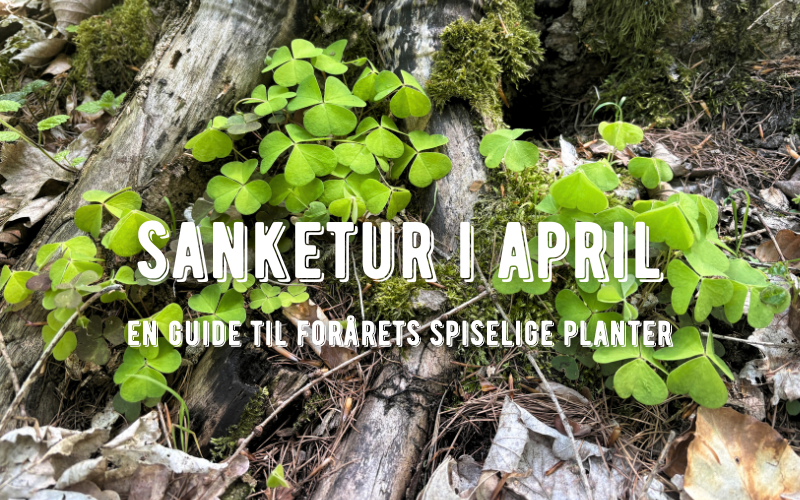
Wood sorrel is one of the first spring herbs to appear on the forest floor with its fine, light green heart-shaped leaves and delicate white flowers with purple veins. It has a fresh and tangy taste due to oxalic acid, and it is well suited as a tangy boost in salads, as decoration, or in fresh spring desserts.

Where is it found? Wood sorrel grows in shady, moist forests – especially beech forests – where it covers the forest floor like a small green carpet.
How to recognize it? Small, three-part leaves that resemble clover but with heart-shaped leaflets. The leaves fold together in shade or when touched. During the flowering period (April–May), it produces white flowers with fine purple stripes. Tastes tangy and fresh.
How to use it: The fresh leaves and flowers can be foraged and used directly in cooking. They look beautiful as decoration and add a tangy touch to salads, open sandwiches, desserts, and drinks. It is also well suited for herbal tea or as decoration on cakes. Use it sparingly, as oxalic acid in large amounts can strain the kidneys.
Foraging tip: Walk quietly on the forest floor – Wood sorrel grows low and can easily be overlooked or stepped on – look for small, light green heart-shaped leaves in shady areas.
2. Garlic Mustard (Alliaria petiolata) – Mild and mustardy flavor.
Garlic mustard is an aromatic and versatile wild plant that appears in April with its fresh green leaves and the first white flowers. Garlic mustard is a fantastic plant to forage, especially in spring when the fresh leaves have the best flavor. It has a mild garlic-like scent and a slight mustardy taste, making it perfect as an herb in outdoor cooking.

Where is it found? Garlic mustard thrives along forest edges, hedges, roadsides, and in parks. It often grows in shady or semi-shady areas. It is common throughout Denmark and can often be seen in large carpets along paths and forest roads. You might also be lucky to find garlic mustard on the beach.
How to identify it? Round leaves and small white flowers later in the season. The young leaves taste best.
How to use it: Perfect as an herb in sandwiches, pesto, or sprinkled over a dish with campfire-cooked fish.

3. White-floured Goosefoot (Chenopodium album) – Nature’s wild spinach.
White-floured goosefoot is also called "wild spinach" and is rich in proteins and nutrients. It can be used like spinach in dishes and has a lovely mild flavor. White-floured goosefoot is one of the most overlooked yet most nutritious wild plants you can forage. It grows everywhere in Denmark and has a mild taste that makes it ideal as a vegetable in cooking.

Where is it found? Gardens, ditch edges, meadows, fields, and along paths.
How to identify it? The leaves are triangular or diamond-shaped with wavy edges. The underside often has a whitish, floury layer that disappears when the leaves are rubbed between the fingers. Small, greenish flowers gathered in dense clusters.
How to use it: The young leaves are perfect in salads, wraps, or as a green garnish on soups and stews. Use it as a vegetable in soups, stews, or in an omelet. It retains its texture and flavor with brief cooking. The dried leaves can be used for a mild herbal tea.
🔥 Foraging tip for cooking over a campfire: Try frying fresh leaves with a little oil and salt on a campfire pan – a simple and delicious snack on the go.

4. Horseradish (Armoracia rusticana) – The Nordic wild wasabi.
Horseradish is known for its sharp, strong flavor and is often used as a Nordic substitute for wasabi. It grows wild in several places in Denmark and is a fantastic ingredient for both spicy dishes and homemade remoulades. Both root and leaves can be harvested and eaten – and freshly harvested horseradish offers far more flavor than supermarket varieties!
Horseradish has been used for centuries as a natural antibiotic and is said to help with colds, sinus problems, and poor digestion. It is rich in vitamin C and has antibacterial properties.

Where is it found? Horseradish thrives on ditch edges, meadows, and in old gardens where it often grows wild. It grows in loose, moist soil and forms strong roots. The roots can be dug up year-round but are best from autumn to spring (September-April) when the flavor is most intense. The leaves can be harvested in spring and summer.
How to identify it? Large, elongated, and wavy leaves with a shiny green surface. The root is strong, white, and coarse – similar to parsnip but with a strong scent when cut. Smells and tastes sharp, strong, and peppery – especially when the root is grated or crushed.
How to use it: Fresh horseradish tastes fantastic when grated over grilled or smoked meat and fish. As a vegetable in stews. The fresh leaves can be used as an herb if chopped.
Foraging tip: Make a homemade horseradish syrup by mixing grated horseradish with honey – a classic remedy for winter colds!
5. Fireweed (Chamaenerion angustifolium) – Green shoots with an asparagus flavor.
Fireweed is a versatile and striking plant that shows its first tender shoots in April. They are crisp, green, and taste and feel similar to green asparagus. Later in the year, the plant transforms into a tall, beautiful flower with light purple blossoms – but it’s the tender, crisp spring shoots that are wonderful and flavorful in cooking that you should gather now.

Where is it found? Fireweed grows in open, often disturbed areas: along forest roads, in clearings, on slopes, ditches, and old firebreaks. It thrives in sunlight and nutrient-rich, loose soil, spreading quickly by both seeds and root shoots.
How do you recognize it? In April, you only see the young, light green shoots emerging from the ground. They resemble asparagus or fern shoots – upright, slender, and slightly reddish at the base. As they grow, they develop long, narrow leaves spiraling along the stem. The flowers, which appear mid-summer, are purple and bell-shaped.
How to use it: The tender shoots can be steamed, fried, grilled, or eaten raw – just like asparagus. They go well in omelets, pies, pasta dishes, or simply as a side with a bit of butter and lemon. You can also pickle them.
Foraging tip: Later in the season, the flowers can be used as decoration, and the leaves can be dried and used for tea – known as “ivan-tea” in Eastern Europe ☕
6. Edible Morel (Morchella esculenta) – The forest floor’s hidden delicacy
The edible morel is one of spring’s most sought-after and exclusive mushrooms. It has a unique appearance with a honeycomb-like cap and a rich, nutty flavor.
In April, you might be lucky to find the first specimens at forest edges and old gardens – but be careful not to confuse with poisonous species, and ensure proper cooking.

Where is it found? Edible morel appears in April–May, often at forest edges, under deciduous trees (especially ash and elm), in old gardens, parks, thickets, and disturbed soil areas. It prefers calcareous soil and thrives in warm springs with moist periods. It is a rare but not impossible find for the patient forager.
How do you recognize it? The morel has a distinctive, hollow cap with deep chambers and indentations – almost like a honeycomb. The cap color can vary from yellow-brown to gray-brown, and the entire mushroom (both cap and stem) is hollow. It grows directly from the ground and is 5–15 cm tall. It must not be confused with the false morel, which is poisonous – characterized by a more brain-like, irregular cap and a solid interior.
How to use it: Edible morel must always be cooked – it is mildly toxic when raw. Cut it in half, rinse thoroughly (small creatures can hide in the hollow), and fry it well in butter. It has an intense, umami-rich flavor, making it perfect for cream sauces, pasta, risotto, or as a star ingredient on toasted bread. It can also be foraged, dried, and used later – but still must be cooked before use.

Foraging tip: Morels require practice 🍄
There are poisonous look-alikes – only forage morels if you are completely sure, get help from a book, app, or an experienced mushroom hunter.
7. Shepherd’s purse (Capsella bursa-pastoris) – A spicy gem by the roadside
Shepherd’s purse is a small, humble plant with heart-shaped seed pods that hide surprisingly much flavor. The whole plant is edible and has a peppery, mustard-like taste that adds character to salads and hot dishes.
In April, the tender leaves and flower buds are perfect to forage – and they appear almost everywhere.

Where is it found? Shepherd’s purse is one of the most common wild plants in Denmark. You’ll find it along ditches, on lawns, in gardens, roadsides, fields, and almost any open area with some bare soil. It’s hardy and sprouts early – even in April.
How to recognize it? The plant has a rosette of small, toothed leaves at the base and sends up a thin stem with small white flowers and distinctive, heart-shaped seed pods – the “purses” it’s named after. It’s easy to overlook, but once you’ve seen the small hearts, it’s easy to identify.
How to use it: The young leaves can be foraged and used in salads, pesto, or as a green garnish – they have a spicy, mustard-like flavor. The small flower buds and seed pods can be pickled or used like “wild capers.” Stems and leaves can also be steamed or lightly fried as a green side dish. Often used in wild food as a flavor enhancer and decoration.
Spring in full bloom: Forage thoughtfully in April
April is the month when nature really begins to unfold – and that means your foraging basket can quickly fill with fresh, green flavors.
Good advice when foraging:
Use your common sense and reliable sources – Use a trusted book or an app for species identification when foraging. If in doubt, leave the plant alone.
Be gentle in nature – Only forage what you need, and let the plants spread and continue to bloom.
Avoid polluted areas – Stay well away from roadsides, sprayed fields, and industrial sites.
Let your senses guide you – Many wild plants reveal themselves through taste, smell, and texture.
Seek inspiration – A good foraging book or a trip with an experienced foraging guide can make a world of difference – especially for beginners.
Foraging in April is an opportunity to fill your kitchen with the energy of spring – from the crisp shoots to the first wild flowers and mushrooms. Forage with respect and care, so you can both enjoy nature’s abundance and help preserve it.
Foraging tip:
You may forage freely in public forests and natural areas for personal use. On private land, you must always have the owner’s permission to forage.
Equipment for the foraging trip – what’s nice to have with you?
Last but not least, here is a small checklist of things that can be good to bring when you go on a foraging trip in April.
🧺 Basket or cloth bag
- Avoid plastic bags – wild herbs benefit from air. A basket or cloth bag keeps the plants fresh and less compressed.
🔪 Small, sharp knife or scissors
- To cut shoots, leaves, or roots precisely without unnecessarily damaging the rest of the plant.
🥄 Small shovel or plant scoop
- Perfect for digging up, for example, horseradish or goat’s beard shoots. A folding shovel is handy in the backpack.
🌱 Containers with lids
- For delicate herbs or mushrooms – e.g., small plastic containers, egg cartons, or lunch boxes, so they don’t get crushed.
🧤 Gardening gloves
- Especially if you need to dig in the soil or forage in areas with nettles, thorns, or rough ground.
📚 Foraging book or plant guide
- Bring a physical book – or use an app – so you can quickly look up if you’re unsure about a plant while on a foraging trip.
📱 Smartphone with app
- There are several good apps for plant identification. Use them as extra help – but never as the only source.
🥤 Water bottle and a snack
- It sounds trivial – but foraging trips can become longer (and cozier) than you think. Especially in sunshine.
📸 Camera or mobile phone
- Take photos of your finds – especially if you want to identify something later or document your foraging trips.


