
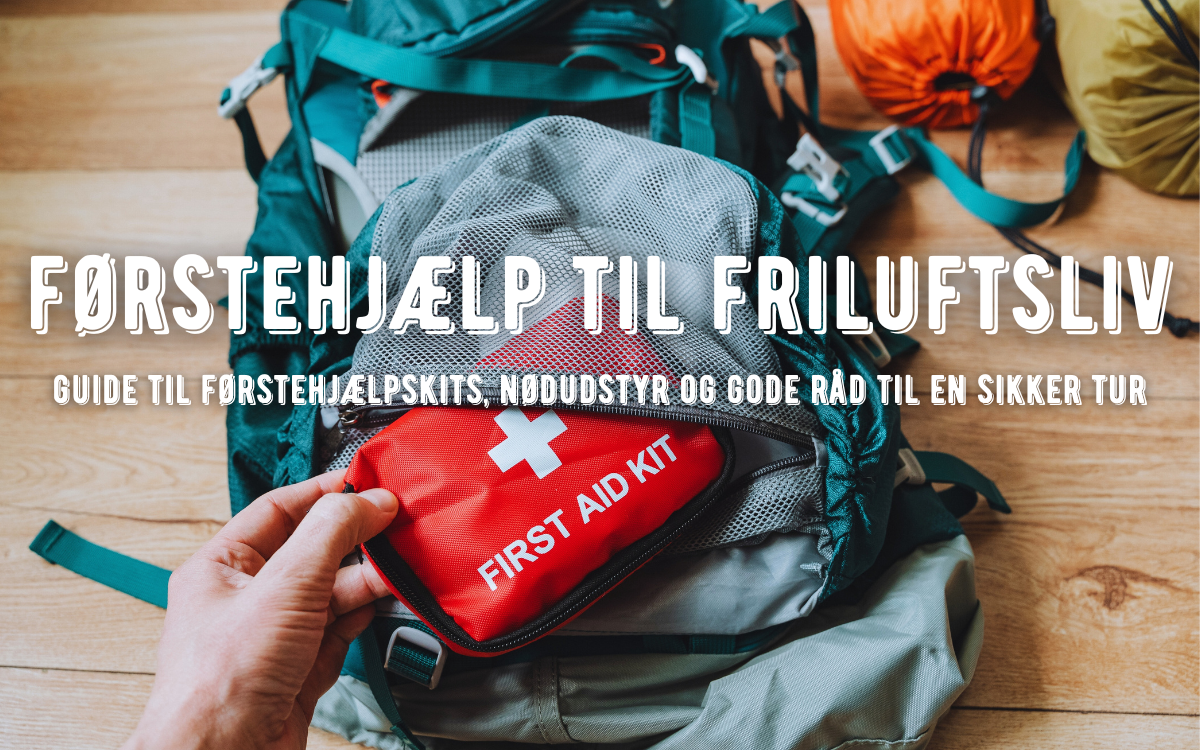
First aid is one of the most important things you can prepare when you’re heading out into the wild
First aid is something we all hope never to need – but it can be both unfortunate and, in the worst case, dangerous not to be prepared if an accident does happen.
When we are in nature, we can encounter situations and injuries that we might not face in everyday life. That’s why first aid is one of the most important things to keep in mind, whether you’re on a hike, canoe trip, or a weekend of bushcraft.
It’s easy to think that nothing will happen. We take care, think things through, and are responsible people. But when we go out into nature, we also enter environments we cannot control. We can’t control the weather, we can’t always foresee a hole in the trail, and even for the most experienced, a knife can suddenly slip between the fingers.
That doesn’t mean you should walk around afraid – nature experiences should above all be wonderful and joyful. But you can never go wrong by approaching nature with a healthy respect.
Some simple precautions can make a big difference for safety on the trip:
Tell someone where you are going
Share your route and expected return time
Plan the trip in advance
Bring a first aid kit
Small preparations can make a big difference if an accident should happen.
First aid kits and equipment
Here at Survivalstore.dk you will find, among other things, a selection of pre-packed first aid kits for outdoor life. Many of these are called IFAK, which stands for Individual First Aid Kit.
A typical kit includes, among other things:
Plasters
Compresses and gauze
Various bandages
Disposable gloves
Bandage scissors
Emergency blanket (foil blanket)
Also consider that if your compress and bandaging techniques are a bit rusty, it might be a good idea to brush up on first aid before you head out. The right technique can make a big difference when it comes to handling injuries correctly.
Just like with much other outdoor equipment, a whole world of possibilities opens up once you start diving into first aid supplies – especially if, like us, you like to be prepared.
If you want to read more about safety and planning trips in nature, we also recommend the books First Aid & Outdoor Life by Julie Pio Kragelund and Hiking and Outdoor Life by outdoor guide Mette Mortensen, who many may know from Alone in the Wilderness. It includes, among other things, a chapter on first aid on trips.
Find the right first aid kit for your trip
When choosing first aid equipment for the trip, there are especially three things worth considering:
1. Where are you going?
If you are going hiking, it is an advantage to have a light and compact kit, which is easy to pack in the backpack.
Some first aid kits are designed with The MOLLE system (Modular Lightweight Load-carrying Equipment), which makes it possible to attach the equipment outside the backpack. This means you can quickly access your first aid kit without having to rummage through the entire bag.
2. How long will you be away?
The longer the trip, the more equipment you should bring. A week-long hike in the Norwegian mountains naturally requires more preparation than a short day trip nearby – both because you are farther from help and because the likelihood of minor injuries increases over time.
3. What environment will you be in?
If you are going on the water, a waterproof first aid kit be a really good investment. Soaked gauze and bandages are not very useful when you need them.
No matter which kit you choose, the most important thing is that you:
can get to it quickly
know what it contains
know how to use it
When planning what to include in your first aid kit, it is important to consider both the length of the trip and the potential risks. On a short day trip, you can get by with just the essentials, but on longer trips or in more challenging terrain, it is wise to bring extra bandages, painkillers, emergency flares, and perhaps even a small set of tools. Thinking in scenarios helps you pack smartly, so you don’t end up with too much or too little equipment.
Tips and good advice for first aid on trips
Besides actual first aid equipment, there are also a number of small items that can be incredibly practical to have in the bag.
Water
It can hardly be said often enough: It is important to maintain fluid balance.
On longer trips, it is a good idea to plan where you can get water along the way. With purification tablets or a water filter, you can make natural water drinkable so you don’t have to carry all your water from home.
Painkillers and antihistamines
Mild painkillers such as paracetamol or ibuprofen can be a good idea to have in the bag.
Antihistamines can also be useful – not only for allergies but also to reduce reactions to insect bites from, for example, mosquitoes, bees, or wasps.
Burn gel for minor burns
A cooling burn gel or spray can be a very good addition to the first aid kit. It can relieve pain and help the skin with minor injuries such as:
insect bites
scratches
sunburn
minor burns
It is a small item that can be surprisingly versatile on a trip.
Emergency signaling
If an accident happens and you need help, it is important to be able to draw attention to yourself.
A emergency whistle is a simple, lightweight, and effective signaling tool that takes up very little space in the bag. Glow sticks can also be useful – both for emergency signaling and for visibility in the dark.
Small items that are also good to bring along
Many of the most practical items you may already have at home:
Tweezers or tick remover – for small but frequent problems
Safety pins – can be used for everything from bandages to equipment
Blister plasters – can save a hike
Cleaning wipes or hand sanitizer – for wound hygiene
Sunscreen – also in winter, especially at high altitudes or in snow
Lip balm and hand cream – cold and wind can quickly dry out the skin
Safety and adventure go hand in hand
With the right first aid equipment and knowledge, you can go on trips with confidence and focus on the experience. Small preparations and good habits allow you to fully enjoy nature – whether it's a short day trip or a longer hike in the mountains.